In the mood for some free YA sci-fi? Craving a fast-paced, gritty tale of genetically modified superpowers? Enjoyed Chronicle, Arrow and The Amazing Spider-Man, and feel like something kinda similar? Then head on over to Reading Lark, because those lovely peeps are giving away THREE copies of ALTERED!
Category Archives: Writing
YA sci-fi: THE DROWNED CITIES
Paolo Bacigalupi first stormed his way into the world of YA sci-fi with SHIP BREAKER, an award-winning and richly imagined tale of scavengers in a post-apocalyptic future. It was vivid, hyper-detailed in its world-building and characterization, and told with verve and a crackling, dangerous energy.
He has returned to this world with a companion novel — not a direct sequel — called THE DROWNED CITIES.
And it’s somehow even more immersive, propulsive and compulsive.

Bacigalupi has crafted a narrative that is more dangerous, more richly imagined, and wider in scope than that in SHIP BREAKER, even as he hones his focus. It’s a rare achievement.
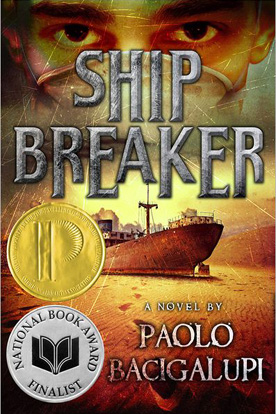
THE DROWNED CITIES explodes out of the gate with an extraordinarily visceral and thrillingly sustained reintroduction to one of SHIP BREAKER’s most fascinating characters, the genetically engineered, ferocious, mythic and complex half-man called Tool. Although the story takes a few beats after that, crunching gears to suddenly slow down its pace as we meet the new characters Mahlia and Mouse, it picks up again steadily, and then just doesn’t stop building its intensity and pace. Seriously, it just gets bigger and badder and faster and more overwhelming until it reaches its crazy, symphonic crescendo of a conclusion.
It’s one of those stories that propels you through it, making you care about every character, every detail. Bacigalupi has a natural affinity for the rough-hewn poetry of his brutal, hybrid future-state America. The environment and atmosphere, the humanity, the tech, are all grounded in a gritty, visceral reality. It really does feel like a believable, if terrifying, future. The apex of this kind of YA literature must surely be Melvin Burgess’s BLOODTIDE, which fused Norse myths with the burnt-out tech of a dystopian future London to create a stunningly imaginative and rawly poetic YA tour-de-force.
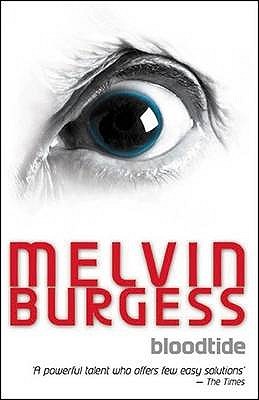
It’s to Bacigalupi’s credit that he builds his powerfully imagined world pretty much from the ground up, and reaches those same innovative, poetic heights of violence and mayhem, sadness and hope.
THE DROWNED CITIES is powerful, hypnotic story that will consume you, and stay with you. We can only hope that Bacigalupi has plans for a third novel set in this world. The velocity and trajectory of this novel demand it. Come on, Paolo. You know you want to!
Guest post alert!
Hello everyone! Just a quick heads up that the kind and wonderful Kelly over at Belle Of The Literati gave us the chance to write a guest post! We love geeking out about our favorite things, so you know we jumped at that chance: we talk about ALTERED, where the inspiration came from, how it was written… we also get into TV, YA, sci-fi, and some other cool things. Check it out right here!
Influence Is Bliss, episode two: Russell T. Davies
How do you know when you’re watching something written by TV writer, showrunner extraordinaire and all-round genius Russell T. Davies? You’re probably crying.

Russell T. Davies
And by the way, those tears probably started in laughter. Which happened in the middle of a thrilling action sequence in which the characters you LOVE are thrown into high stakes peril, and have to use extreme cleverness to save themselves from a situation that somehow blends terrifying concepts with overwhelming heart, soul and emotion.
That’s just an average scene for Davies, because he is the master of the human heart. When he REALLY wants to mess with you, it’s just devastating.
Davies is best known for his tremendous resurrection of the longest running sci-fi show in TV history, DOCTOR WHO (it first aired in 1953!). This tale of a time-traveling Time Lord known only as The Doctor who journeyed through the universe in a TARDIS (a time machine in the form of a blue police box), usually in the company of one or two humans who were looking for adventure, was originally a much-beloved, yet quaint, show on the BBC. It was known for its charm, inventiveness, futuristic electronic scores and less-than-stellar special effects. Sadly, over time, ever more ridiculous storylines resulted in the show being axed in the eighties, seemingly never to return (with a brief exception in the form of a TV movie that popped up in 1996).
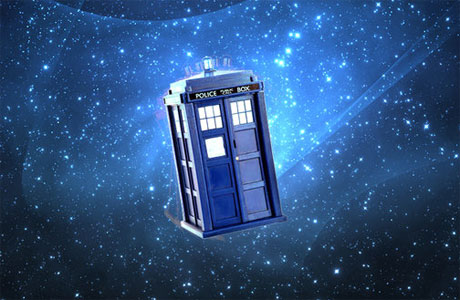
The TARDIS. There’s a reason why it looks like that.
However, Davies, who, despite his roots in the gritty, everyday dramas of everyday people, was a huge sci-fi fan, and a fan of the show, rescued it from its cancellation wasteland in 2005 and rebooted it into a glossy global phenomenon.
How did he do it?
With brilliant writing. With feelings. With, as the ultra-smart and Scottish late night talk show host Craig Ferguson describes it, a healthy dose of “intellect and romance.” Because no one does feelings quite like Davies. His stories and scripts are overflowing with heart and emotion. And they’re extraordinarily clever too. But it’s not the cleverness that keeps us there: it’s the people. Davies’ background in writing astonishingly great dramas about “everyday” people was key to the success of this most fantastical of shows. Davies knows how to give us the shortcut right into a character’s soul, and make us feel what they feel. Although the show is called DOCTOR WHO — and although Davies did reimagine the Doctor as intelligent, bold, and very funny, as well as being a dangerous and charismatic hero-figure — he was the first to truly realize that the heart of the show (one of them at least) should be the human companions that accompanied this alien Time Lord. Because they were our stand-ins. Our view into the conceptually mind-bending experience of actually traveling through time.

The Doctor (on the left) and something REALLY SCARY on the other side of the wall
Davies was rebooting a sci-fi show and making it fresh and “now.” He could have focused on spaceships, spectacle, action. Instead, to begin this new journey, he crafted a beautiful hour of television that showed us how a girl with dreams plucks up the courage to try and chase them. And so his first episode, the one that relaunched the show, was simply titled Rose, after the girl who decides to give up her life on Earth to follow the Doctor into the stars.

Rose Tyler, played so perfectly by Billie Piper
Rose Tyler is an ordinary, working class girl, living a regular life, living with her mother in a tiny flat, working in the local department store, just trying to get by. But she dreams of so much more than that. When she gets chased by mannequins possessed by an evil alien lifeforce, has to deal with her store blowing up, and, in one brilliant scene, fails to notice that her boyfriend’s monosyllabic responses are not due to his disinterest but the fact that he is a replica created by the aliens, Rose realizes that life doesn’t have to be ordinary, or even safe. She chooses the thrill of the unknown, and accepts the Doctor’s offer (once he’s saved the day), to journey with him. The smile on Rose’s face as she runs into the TARDIS is one of the emotional high points of the entire show.
Davies understands what it is to dream of something more than what you have, and how you can become something extraordinary when you’re in the most challenging of situations. His characters, his writing, resonate so powerfully. As writers often like to say on Twitter, his writing has ALL THE FEELS.
His era of Doctor Who ran from 2005 through 2009, and it was extraordinary. It’s up there with the best of TV sci-fi like BUFFY, FIREFLY, STAR TREK, BSG, FRINGE, and Davies’ own WHO spin-off, TORCHWOOD. Davies wrote a book about running DOCTOR WHO, called The Writer’s Tale. If you are writer of any kind, a storyteller of any sort, a fan of the show, a fan of sci-fi, a fan of TV, an aspiring showrunner, or just interested in how stories are told, you need to read this book. It’s one of the greatest books about writing, about stories, about TV, ever written. You can see the detailed evolution of stories from initial idea to treatment to draft to shooting script. It’s fascinating, and it shows you above all how important character is.
It doesn’t hurt that Davies is a genius sci-fi writer, able to spin incredible ideas together and create deep and detailed worlds, often one after another to fulfill the hungry demands of a long-running episodic TV show. And he subtly layers in long-running arcs that build to insane crescendos like a boss.
But whatever he is writing, however fantastical the setting, Davies’ primary concern is always the character, and how to make us feel.
And boy, does he make us feel.
ALTERED: a 2012 Honorable Mention, and a GIVEAWAY!
Hello all! Hope your holiday seasons have been going wonderfully! We’ve been hard at work in the bunker, creating playlists of remixed Christmas songs and working on our sequel to ALTERED (our super-clever working title: ALTERED…2). But we wanted to step outside for a moment (even though it’s about 32 degrees with howling winds and light snow where we are right now), because ALTERED was just given an honorable mention in a Top Ten list for 2012, courtesy of the lovely Libby Blog, one our fave book blogs! Thank you Ange and Rachel for giving us a mention! That brings us some Christmas cheer!
Speaking of which, since it’s the season and all, we’re offering an ALTERED giveaway! That’s right, free copies of ALTERED waiting for you to win them. Because nothing says Christmas like YA sci-fi (it’s true, we checked). All you need to do is head over to our Goodreads giveaway page and click to sign up for a chance to win a free copy of ALTERED!
Happy Holidays!
Influence Is Bliss, episode one: Joss Whedon
Welcome to a new series of posts we like to call “influence is bliss.”
In this series, we’ll be looking at different writers who inspire us, and who we love being influenced by. Writers who thrill us. They could be writers from the world of YA, TV, or movies. They are all writers who move us, teach us, and make us want to write like, right now.
There’s a long list of these writers who carry us away with their sometimes funny, sometimes heartbreaking, but always beautiful words. Words that change the way we look at the world.
We figured we’d start with a writer who has been a huge inspiration for years, and even more so this year.
Joss Whedon.
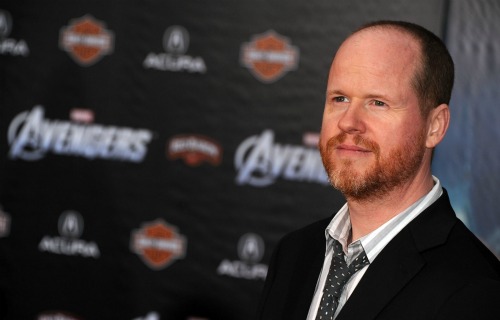
Joss Whedon, superstar writer, director and showrunner
Genre-blending hero. Fan favorite. Beloved creator, showrunner and overseer of some of pop culture’s greatest achievements: Buffy, Firefly, Serenity, Dollhouse... Alien Resurrection (we liked it!). And, of course, The Avengers, soon to be followed by a S.H.I.E.L.D. TV show centering on Agent Coulson (“Nick? His first name is agent.”), and, of course, Avengers 2.
What a trajectory. What an icon. What a hero in the geek world. And one of our most important writing influences.
While Whedon proved his action-directing chops with The Avengers this summer, first and foremost it showed just what an extraordinary writer he is. Whedon is one of the few who can seamlessly blend action, humor, and emotion into a tightly executed plot. All while giving his characters deep inner lives and complex arcs.
One of the finest examples of Whedon’s talent is the “meltdown” scene in The Avengers, where our heroes argue themselves into self-destruction. We could watch that scene again and again. It is written with the control of a true master. There are six characters in one room, all with their own emotional trajectories that intersect perfectly. They’re all suffering in different ways, all losing it uniquely, driven by their personal desires and frustrations.

It’s about to get real.
The characters are blasting zingers and snark at each other with both barrels, nailing weaknesses and vulnerabilities, pushing each others buttons like pros — and this is SIX characters firing at each other with machine gun speed as the camera wheels around them.
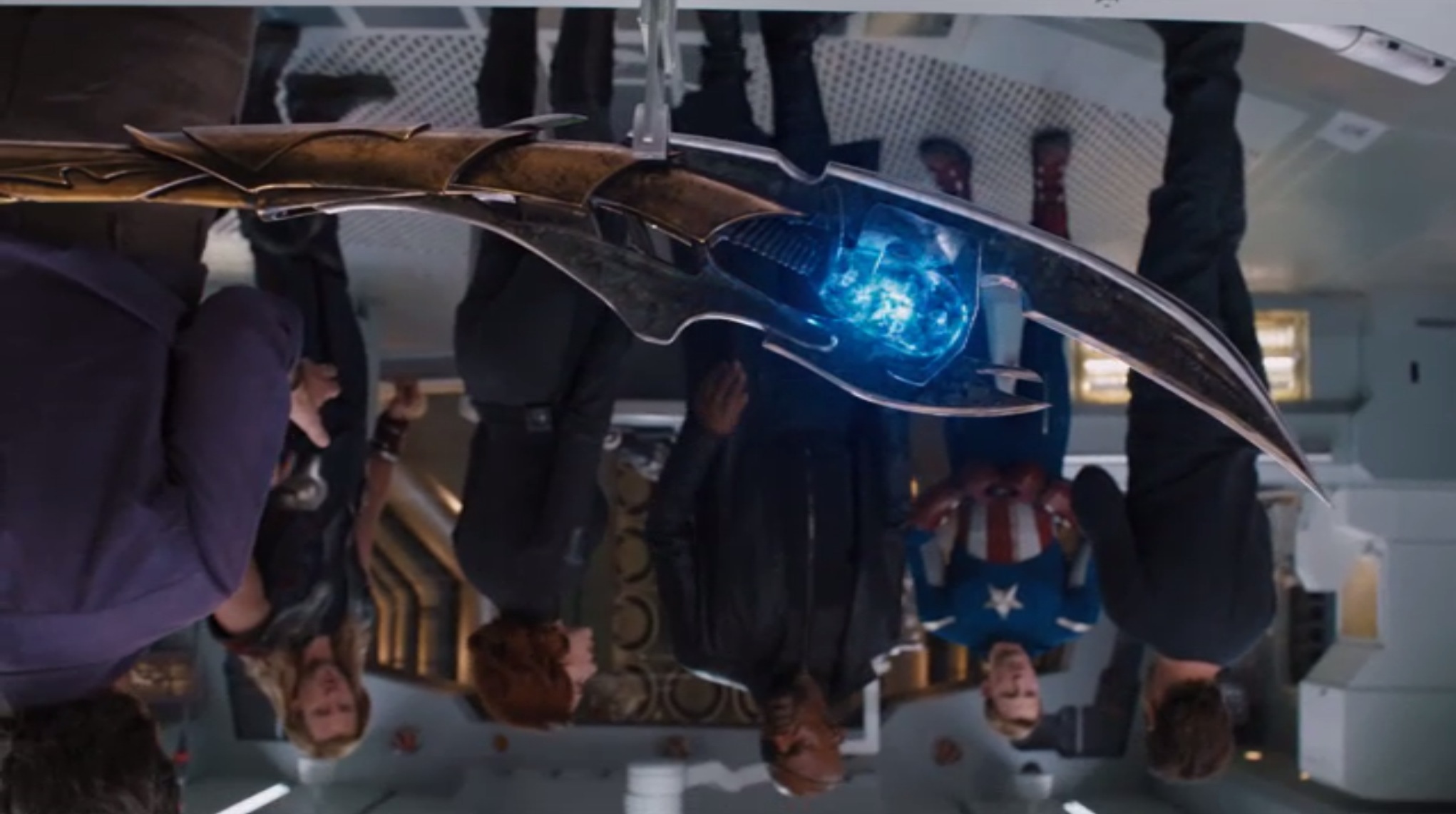
Don’t worry – it’s supposed to be upside down. This is Whedon turning everything on its head… literally.
It’s like six Shakespeare plays crunched into a few firecrackingly explosive, freewheeling minutes. Everyone’s a protaganist, an antagonist, an aggressor, a victim. As the massive egos showboat and collide and implode, it’s dangerous, and funny, and heartbreaking.
This scene is a masterclass of Whedon-writing: every character’s motives and fears are laid out. The tension builds and is broken with humor before building again. The plot turns and our heros remain true to themselves despite the revelation that they are more than the weapons they wield.
This is another Whedon skill; giving us something real to carry us through the fantasy. Take the now-beloved Agent Coulson; in the shortest of dialogue this previously sidelined supporting player became a fully humanized fan favorite (the cellist, the trading cards) whose fate we desperately care about.
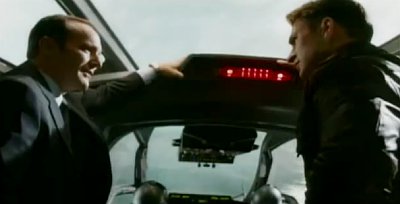
- Nick “I watch you sleeping” Coulson
There’s no flashback or soliloquy. Everything is in motion. Everything is kinetic. Because Whedon’s writing always flows.
For Whedon, drama is not only conflict, it’s rhythm. Lift us up, smash us back down (in the emotional sense, not the Hulk sense). Whedon pulls reversals mid-scene, mid-line, but always keeps us hanging on. He’s like a fighter jet that can turn on a dime, rotating through all kinds of crazy angles at high speed. His writing is extremely agile, which allows him to take us on intense dramatic journeys.
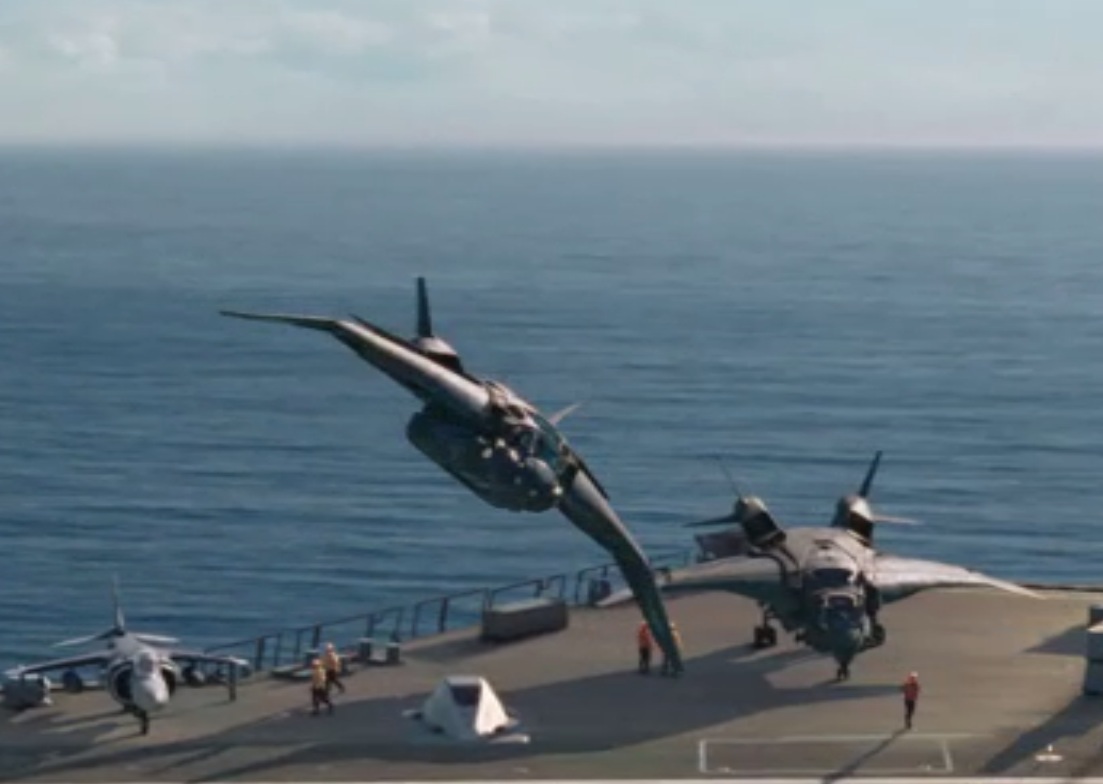
This is Whedon’s writing style (Whedon not pictured)
The Avengers meltdown may be one of the greatest written scenes in cinema history. This scene’s honesty, emotion, rhythm and humor defines “Whedon-esque.” You just marvel (pun… yeah, intended) at his skill.
Of course we cannot talk about Whedon as a writer without talking about his women. As evidenced by this scene, and by pretty much every scene he’s ever written, Whedon writes incredibly real and inspirational female characters. It is, unfortunately, something that needs to be called out. Because, as sad as this is to write, it’s still unusual. Just compare Black Widow in Iron Man 2 and in The Avengers. It’s no surprise that the creator of Buffy can give us a complex, accessible, conflicted, vulnerable, powerful, beautiful, smart and kick-ass Natasha Romanov. Whereas in Iron Man 2, she basically had to look good in leather.
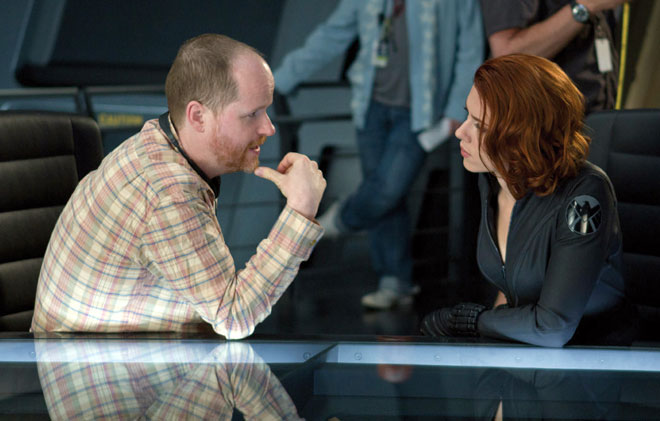
Whedon and Johansson: intelligent superheroes
To sum up, because this blog is going much longer than we intended, Joss Whedon inspires us to be better. He pushes us to write harder, push each beat further; to have fun, cry, mess with the audience, kill characters, and, of course, make it all incredibly entertaining.
Writing is our TARDIS
Why do we write?
It’s a question writers often get asked, and probably one we think about all the time anyway. There are a lot of answers to that question; as readers and fans you’ve no doubt seen a lot of them. It’s something writers love to talk about, and we always love reading and hearing what our favorite writers have to say on that subject.
Most of the time, for us, we write because we don’t know how not to. We just can’t not write. Whether it’s sitting at the desktop or laptop, putting notes down in a phone, or using actual pen and paper by scribbling in one of our several thousand notebooks, or grabbing the first thing we can find (ripped open envelope, back of an already used post-it, margin of a magazine… back of our hands even)… inspiration and ideas strike constantly.
It happens all the time, and everywhere.
Out walking, sitting on a train, having a coffee, when the lights are out and just before falling asleep, watching TV, watching a movie. Being a writer means being on call to the beautiful muse, 24/7.
There are other reasons too: writing keeps us sane, helps us make sense of the world (and of ourselves)… but perhaps most importantly of all, we just love it.
We love it so much.
It’s an absolute blast, writing and being a writer. At its best, it feels like being in Pink Floyd or Muse and playing a guitar solo in a stadium full of screaming fans.
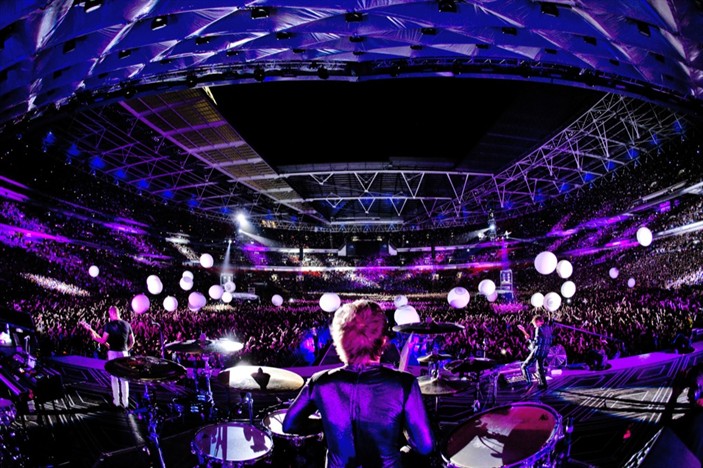
Just another Wednesday night, sitting on the sofa with the laptop
At least, it feels that way. Except, here’s the thing: when you’re a writer, there’s usually no one else there. That stadium is empty, most of the time. The truth is, being a writer is very much a “loneliness of the long distance runner” kind of activity. You’re running through an unforgiving landscape with no idea where the end of the race is going to be. But if you want to get there, you have to just keep running.

…or just keep swimming.
There’s really only one way to sustain that kind of existence: you have to love the crap out of it.
And we so do.
One of the most thrilling things in the world for anyone is possibility; but for a writer, the absolute most thrilling thing needs to be making possibilities become real, tangible, actual. You’re architect and craftsman, designer and builder. Yes, you have to be made of steel sometimes; you have to have an absolutely endless appetite for creating, for that thrill of coming up with something new… and for putting in the hours, weeks, months and maybe years to see it through.
And then, maybe, to spend that much time again getting rejected.
What?! Yeah, ‘fraid so.
So you have to really love it, because if you are in that phase of sending your work to others (agents, competitions, managers, other writers) and not hearing what you wanted to hear, you still need to be coming up with the next thing, and the next, and the next. Your desire needs to be immense, indestructible. Just like Celine says, your heart must go on (no, we can’t believe we went there either). You have to be utterly and hopelessly in love with this thing. Because it will hurt. It will be dark, sometimes. But you know, that’s okay, if you love it. That’s okay, if the sheer act of putting words on paper or on screen makes you feel like you’re Dave Grohl blasting out a Foo Fighters song at the Grammys.

Rocking out son
That absolute blast, that thrill of possibility and exploration is what drives us. The open road, the open sky… the open universe. We love launching ourselves into new worlds. It’s like being explorers, or mountain climbers. There’s a lot that goes into it, but the feeling when you discover that miraculous new world, or see that incredible view from the summit, is the most wonderful thing. We want it, over and over again. We’ll always want it.
Basically, being a writer is like having your own TARDIS.

This is what it’s like in our heads
You get to travel in time and space and see wonderful, mind-blowing things. Dreams that surprise you, scare you, change you. Every time you open a new Word doc (or Final Draft, or even just a blank piece of paper), it’s like the TARDIS has landed, and just like the Doctor, you have no idea what’s on the other side of that door. But you can’t wait to throw that door open and throw yourself into whatever adventure awaits.

Brilliant
Fantastic!
Getting Altered: Genetic Experimentation and Freaky Science in YA
Inspired by a recent tweet of Jessica Khoury’s, which posed the question why does there seem to be a rise in the number of ‘freaky science’ YA novels, we got to thinking… Firstly, that Freaky Science is a brilliant category title which should immediately be a section in all bookstores and added to Amazon’s list of categories. Secondly, that’s a really great question.
Here’s our take:
The possibilities of genetic experimentation have always been flowing through popular culture (The Fly, Jurassic Park), and they’ve particularly been in the air since 1999, when scientists first mapped the human genome. But recently, as observed in the great post that Khoury was referencing, it seems to be exploding in YA.
So why now?
Because YA hasn’t fully gone there yet. It’s still relatively unexplored, fertile territory. It’s a new planet, ready for our Curiosity rovers. And no one loves new planets like a YA writer.
Fiction is a beautifully insatiable hungry beast, always looking for the new. And YA is like fiction on steroids. And probably a couple of Red Bulls. That’s why YA is so damn great: it searches out the new and finds endless ways to use it, expand upon it, and mash it up with something else. It dives into the wonderful depths between genres and returns to the surface with tales of wonder. YA writers are, at their core, pioneers.
Genetic engineering and experimentation is basically a fantastic metaphor for YA. There are those in the industry who can get stuffy about genre/category boundaries. But as Donald Maass said last year, genre is dead. YA writers laugh in the face of boundaries. YA writing loves to combine the DNA of multiple genres to create beautiful, unique creatures. And let’s face it, if we “behaved” and didn’t break the genre rules, there would be no Buffy, no Firefly, no Doctor Who. Species survive by evolving, by changing their DNA. Literature is no different; and YA is the thrilling, defining example of that.
So bring on the genetic experimentation YA — it’s not just a metaphor for everything we do as writers, it’s also an extraordinarily rich source of creative potential. Just like life itself, there are endless possibilities.
We can’t wait to read all of them, starting with Khoury’s own Origin!
Olympic writing
Hello, and welcome to our obligatory Olympic-themed post about writing!
We’re loving the Olympics so far, and seeing all that excellence on display got us thinking about writing. Of course, there are a number of metaphors you could use here: the importance of sticking the landing, having a great anchor routine/fast finish, being driven by passion, staying hungry for the prize… And so many sports to choose from for analogies: the precision of archery, the endurance of the 10,000m, the relentlessness of swimming race after race.
But in the end, what really resonated for us was this: degree of difficulty vs. execution.
Yep, we’ve been watching a lot of gymnastics!
And that’s how gymnastic routines are scored. Each competitor has a maximum potential score based upon the difficulty of their routine, while their actual score depends on how flawlessly they execute it. And it struck us: this is exactly how writing works. Readers, consciously or subliminally, tend to respond to books based on brilliant ideas, brilliantly executed.
What does that mean for writers? True, this is an analytical approach: it’s the layer beneath the layer of how people react to books, and why they fall in love with some and not others. But generally speaking, the more thrilling the narrative (and the thrills can be conceptual, emotional, action-based or humor-related), and the more momentum it has, the more you feel engaged with it. You’re much more likely to keep turning those pages.
We all want novels to sweep us up, take us away, make us dream, lose us deep within their worlds.
That can only happen if the author has a high degree of difficulty in their routine, and carries it out flawlessly. Readers are of course judges, issuing deductions based on each error: typos, character inconsistencies, breaking the flow… they all add up, detracting from the overall experience. Too many, and it can all be over. If the author ends up on their butt, the readers will get up off of theirs and go find something else to do.
Degree of difficulty doesn’t just mean twisty plots, or groundbreaking narrative techniques — it can mean those things, but it can also mean creating deeply atmospheric alternate worlds, making us feel, breaking our hearts, changing the way we see the world, and ourselves. Those things are not easy. But when an author makes them happen, we don’t even see them at work — we just get utterly drawn in, hypnotized, “book-whispered.”
YA authors Patrick Ness and Laini Taylor are the reigning champions. They’re at the top of the podium. The degrees of difficulty of their novels are immense: Ness has to take us to another world and make us experience hearing a multitude of other people’s and creatures’ thoughts, while Taylor has to create new magic and make us fall in love with angels while we feel terror and rage and desire in our blood.
Their execution is utterly flawless. Ness’s brilliance in conveying exactly what it feels like to hear the ‘noise’, while also feeling all of Todd’s extreme emotions, is just staggering. He uses the page in extraordinary ways, and creates something entirely, thrillingly new that is also deeply grounded in overwhelming heart and soul. Taylor is bewitching with her richly mystical narrative scorcery. She fills your head and your dreams with magic and desire. It’s spooky, and wonderful.
The behavior of our hearts is a complex and beautiful thing. When writers impact us on this level, it can change our lives. Just like watching someone win an Olympic gold can be deeply inspiring, and can let us know that dreams can be achieved — with dedication and passion.
What does this mean for writers? You have to constantly practice your craft, hone it, obsess over it like those athletes who get up at 4am and train all day, every day, every week, every month, every year. You have to inhabit your writing. Utterly. You have to keep reading, revising… and writing. Always be writing. It takes an extraordinarily high level of obsession to do this.
So while the Olympians keep winning their medals, as writers we take heart and inspiration. Dreams are wonderful things, but they’re made from sweat and tears, from giving yourself entirely to winning that gold.
ALTERED gets its first Goodreads review!
Well, we’re quite shy and retiring normally, but we just wanted to share some good news with you… ALTERED got its first review posted on Goodreads, with a full five stars! It’s always lovely to hear nice things about your writing — you spend so much time in isolation as a writer, so making this kind of connection means a huge amount — and we’re very grateful to this reviewer.
Here’s an excerpt:
Sci-fi is not my usual genre of choice but, this novel is so compelling I was totally engrossed from page one. It has characters you care about, an interesting plot that never goes beyond the understanding of the reader and as that last page turns, you want to yell, “When is the next edition to the series?!”
Awww thank you!! (BTW you can find ALTERED and that review on Goodreads here)
As it happens, the next edition of the series is on its way! We’ve got the flip charts, colored pens, index cards… lots of names and scenes and arrows all over the place connecting them… The first few chapters are IN, and we’re having a BLAST writing them!
So, better get back to it!
 A.D. Croucher