Winning the Comcast/NBCUniversal TV Prime Time Award

Writing can be a lonely process, even when you’re writing as a team.

For the majority of the time, you write with absolutely no knowledge at all of whether people will ever respond to your writing. You’re writing in the dark. That’s the job; we signed up for it, it’s part of the crazy wonderful life of being a writer. That said, it’s always nice when, every now and then, someone shines a light on the writing that you’re doing. We look up, blinking, slightly taken aback that someone likes what we’re doing. It’s a funny life — you have to believe in what you’re doing 100% with ironclad certitude — you couldn’t possibly make it through the rejections and knockbacks if you didn’t — and yet when someone actually says, this is good, there’s always that feeling of surprise. Like… really? Us?

Awards

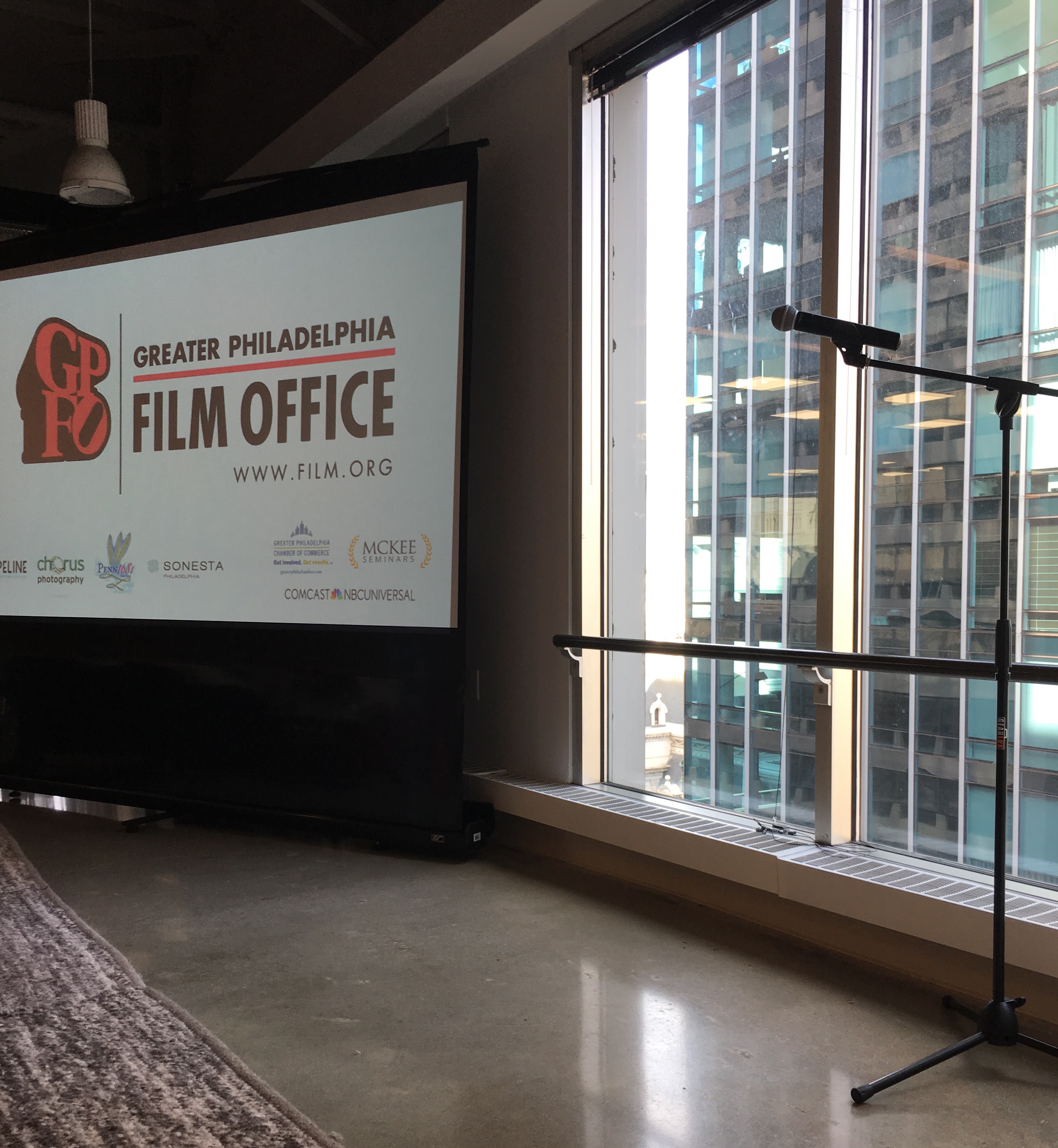
So, when our TV pilot script USE OF FORCE was one of three finalists for the Greater Philadelphia Film Office SIP Screenwriting TV awards, we were shocked. When our script won, officially the Comcast/NBCUniversal TV Prime Time award, we were stunned and overjoyed! That recognition and validation meant so much. It was a particularly nice kind of light to have shone on your work.

Plus, writers don’t get out much. So getting to attend an award ceremony in a beautifully designed space in Center City (with a great view), talk to some awesome people, and eat some fine food… yeah, that was nice!

View

So we’re grateful on many counts — we really appreciate all the people who helped get us there — the readers, the GPFO (special shout-out to Joan!), and the judges. A heartfelt thank you to all who believed in us.

Here’s the official press release.

Writing short movies

When you first start writing something, it can be hard to know what it is.

You might have a line of dialogue in mind, or a character, the beginning of a scene, even just an emotional atmosphere. You might write a few more lines, but still not know… is it a primetime sitcom? An edgy cable sitcom? An indie movie? A webisode? It’s only as you keep on writing (and keep on writing, and keep on…) that you realize what shape your story is… e.g., is it novel-shaped, movie-shaped, short-story shaped, just a single scene… or maybe, is it short movie-shaped?

(This is why the best way to write something is to write it… if you don’t start putting words next to other words, you’ll never get to the words after that… eh, that sounded better before we wrote it — but you get the idea! You won’t write if you don’t write. Boom!)

What counts as short-movie shaped, you ask? (Thanks for asking!) Well, we’ll tell ya.

Firstly, you don’t really have room for the traditional three act structure of movie storytelling. If you’re on the (ideal) shorter end of the spectrum, up to 10-15 mins, you don’t have a lot of runway to set up a story, develop it, and pay it off. Everything in a short movie has to be brutally efficient: each line, each beat, each shot has to work hard to propel your short to its (hopefully awesome) ending.

So a short movie will usually drop you into a situation, which means your writing has to be extra sharp, and your characters have to show themselves quickly and organically. If you want to think of your short movie in acts, each act might only be around 1-3 minutes.

The key to short movies is the reveal, also known as the punchline, or the twist, or the pay-off. A short movie is basically one set up, and one payoff. You can structure that any way you want. As we saw in our last post, Eric Kripke balanced his set-up and pay-off pretty evenly, Colin Trevorrow’s set-up was in the first 30 seconds, and the rest of the short was all pay-off, while Neil LaBute’s short was 99% set-up, with a brilliant pay-off right at the end.

So, as you can tell, the other key characteristic of a short movie is how flexible it can be. That’s the beauty of shorts.

Sorry. Again.

Sorry. Again.

Their lack of formal structure allows you to be truly experimental and bold in your storytelling; the smaller canvas rewards bolder strokes.

Your short movie story could be real-time, or a day in the life, or have massive time-jumps and cover years, or even centuries. What makes it a short movie is that set-up, and pay-off.

You’re usually playing with one idea, or one concept. It could be a war between neighbors that gets resolved in an unexpected way, or someone having a really bad day, or something that’s a set-up and pay-off at the same time — one joke or idea played out to its conclusion, as in Jay and Mark Duplass’s 2003 “$5 short” This Is John, which got into Sundance, and opened a lot of doors for them. It’s the simplest of ideas, executed inventively.


As with all writing, there needs to be tension, conflict, something the lead character is fighting against, or fighting to get. Things need to go wrong in some way. In This Is John, all John wants to do is leave a successful answerphone greeting (remember, it was 2003. Old!). And it’s the one thing he can’t do. It’s the tension between dreams and reality played out to escalating, tragicomic effect.

Your short can be simple, like that, or it can be grandiose, like Neill Blomkamp’s Alive In Joburg (which was later developed into District 9), which obviously has a bigger budget, but it still uses guerrilla tactics to create the impression of scope and scale.


It doesn’t hurt that he had the CGI skills to pull it off. Don’t worry if you don’t. Remember, This Is John was literally just one brother pointing a handheld camera at another brother talking into an answering machine. And it got into Sundance, and it did great there.

As Jay Duplass has said, “the best thing to do is just make your stuff, and make it as best you can at the level you can make it at… and it will speak for itself.”


How to make a short movie: The Real Quinn Hardy

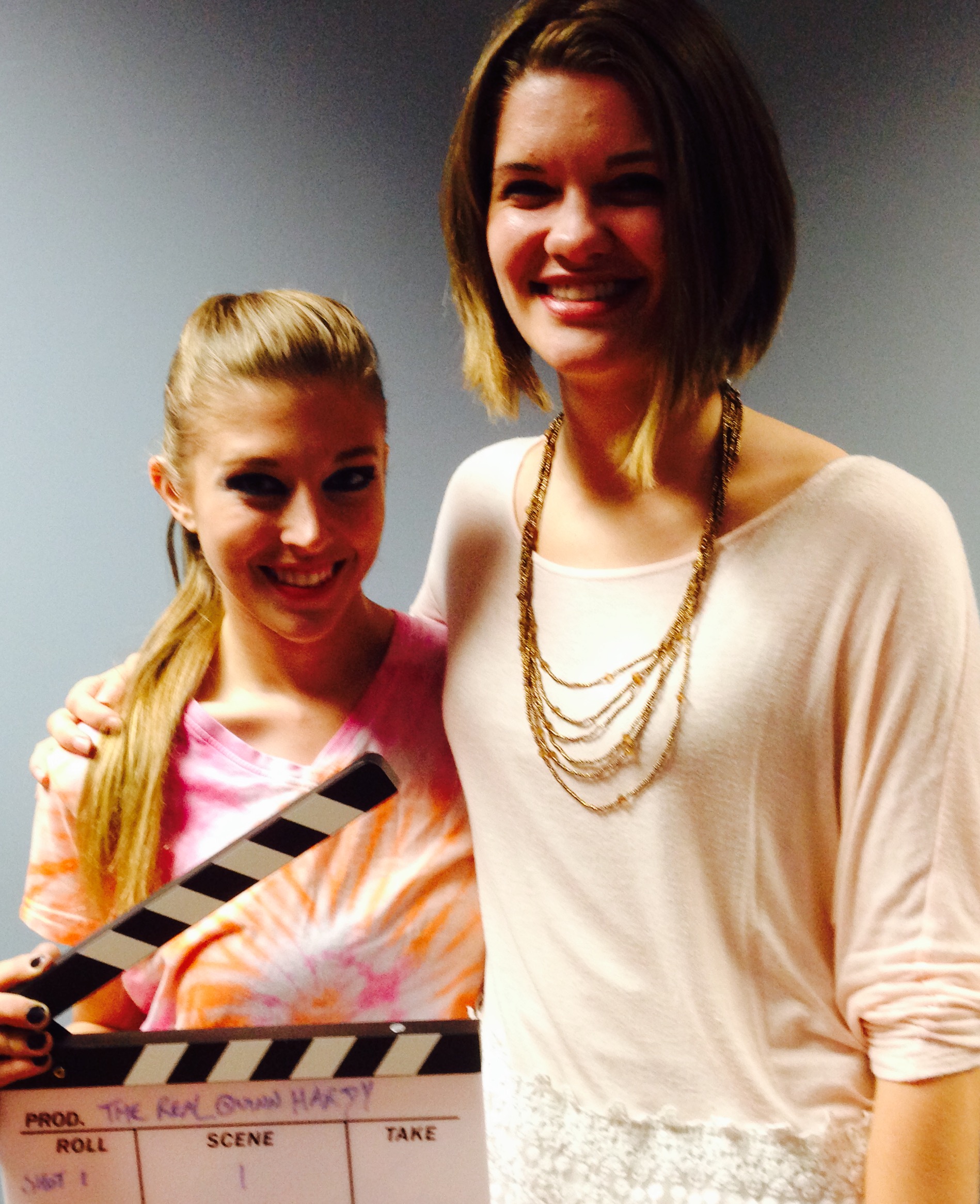
This summer, we wrote, directed and edited a short movie called The Real Quinn Hardy, about an aspiring singer-songwriter who thinks she’s about to make it to the majors. When it all goes wrong, she digs deep to write a song that she hopes will change everything.

It all started back in April, in Nashville, at the Bluebird Cafe, where inspiration struck in the middle of eating a black bean burger, forcing us to actually stop eating (damn it though the burger was SO GOOD, the muse does not respect the burger) and start scribbling the first few ideas, beats and lines of dialogue.

Later that night (after an AWESOME Bluebird set by the way — shoutout to Jessica Roadmap!), we pretty much had a first draft. We spent a month polishing and rewriting it, because all writing is really rewriting, then a month in preproduction where we cast our brilliant and wonderful actors (Rachel Keefe, Ana-Lisa Gunn, Brian Gallagher and Brittany Kleban), storyboarded it, designed the sets, and wrote the song too (which our fantastic lead actress Rachel also sang!).

Then, yikes! We shot it. D went full Spielberg, while A basically ran the set. It was awesome.

Two kick-ass actors: Rachel Keefe and Brittany Kleban

Two of our kick-ass actors: Rachel Keefe and Brittany Kleban

11 hours, 3 scenes, 70 shots later…

Dean

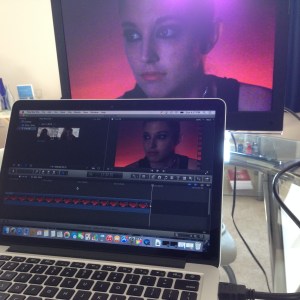
…it was time to edit.

Editing

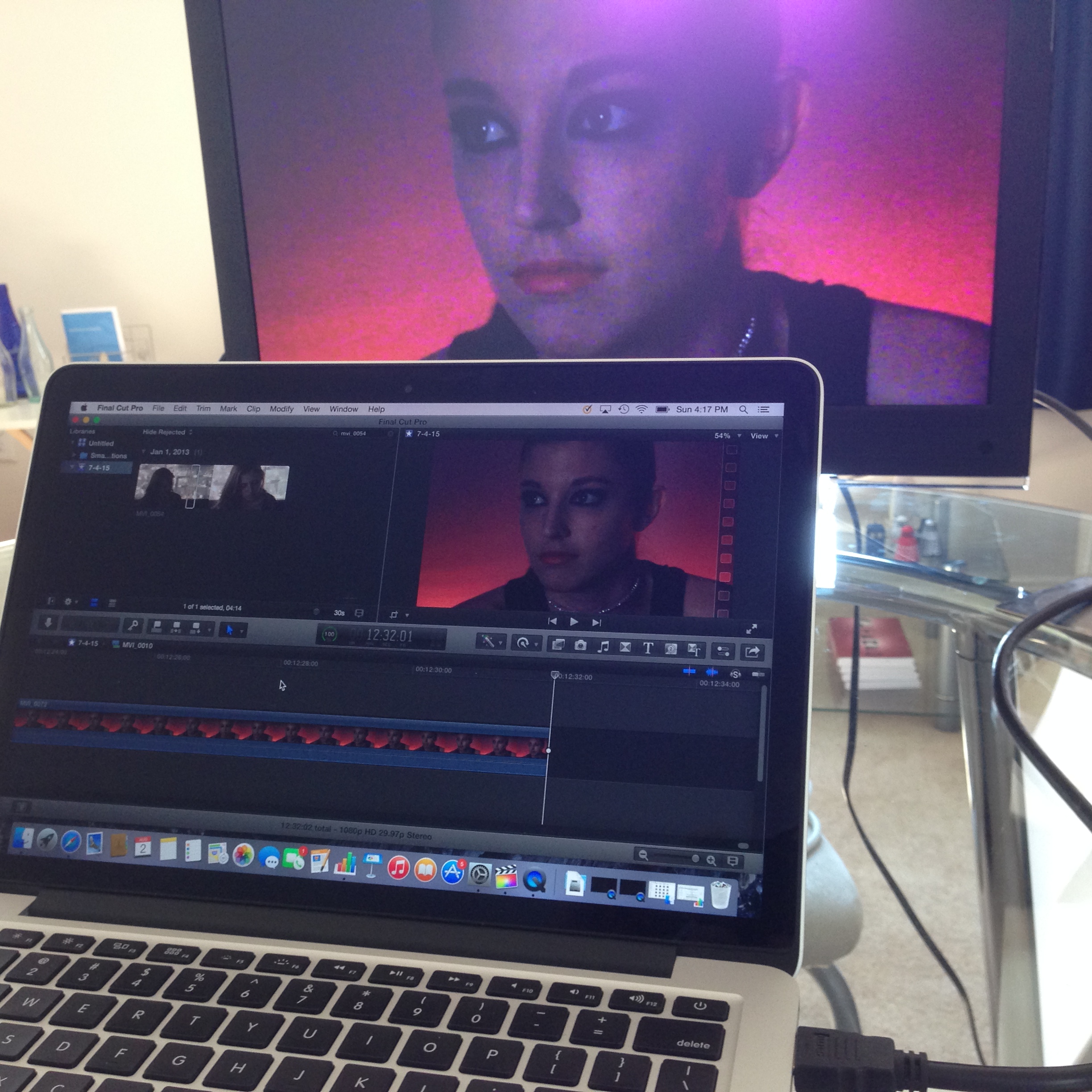
So, we edited. And edited. And edited. And six weeks later (glossing over Apocalypse Now levels of insanity), we had a short movie.

Like, we made a thing, guys. It’s real!

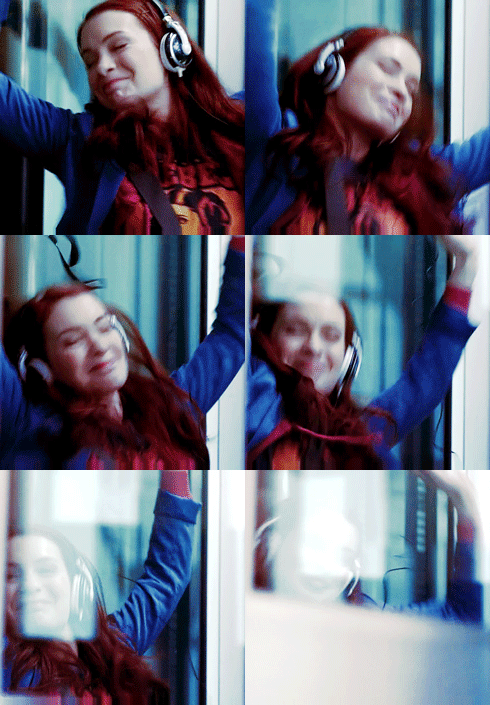
Charlie dancing

We learned SO MUCH from this experience.

The most important, practical thing? Write what you can reasonably shoot with the resources that you have. Think about who you might be able to cast (friends, family, nonunion local actors, your super famous A-list third cousin), what kind of props you can scrounge together, where you can shoot, and then base your story around that. Yes, spaceships would be cool. Couple of dinosaurs? Obviously awesome. Superheroes who can fly? Hell yeah. But, realistically, it’s more likely to be people drinking coffee. Which is FINE –two people talking in a room can be beautiful, epic, hilarious, devastating… As long as you write it that way!

No less a filmmaker than Judd Apatow summed up his entire filmography as exactly that — people sitting around talking. You could say the same thing about Cameron Crowe (the brilliantly mind-bending Vanilla Sky aside).

It’s all in the HOW, not the WHAT.

The what is “people talking.” The how is the kind of people, the subjects they talk about (and around), and where they’re talking. Are they in a cafe, on a space station, arguing about comic books, dealing with an alien invasion (you know, the usual short movie topics).

The question you need to ask yourself is how can you make your people talking interesting? What’s the hook? What’s the thing about your story that is purely you. The thing only you could do in that moment? Because there is something — you just need to find out what it is. Felicia Day was a hardcore gamer when she started writing her groundbreaking web series The Guild — it’s people talking, but the hook was gamers talking about gaming.

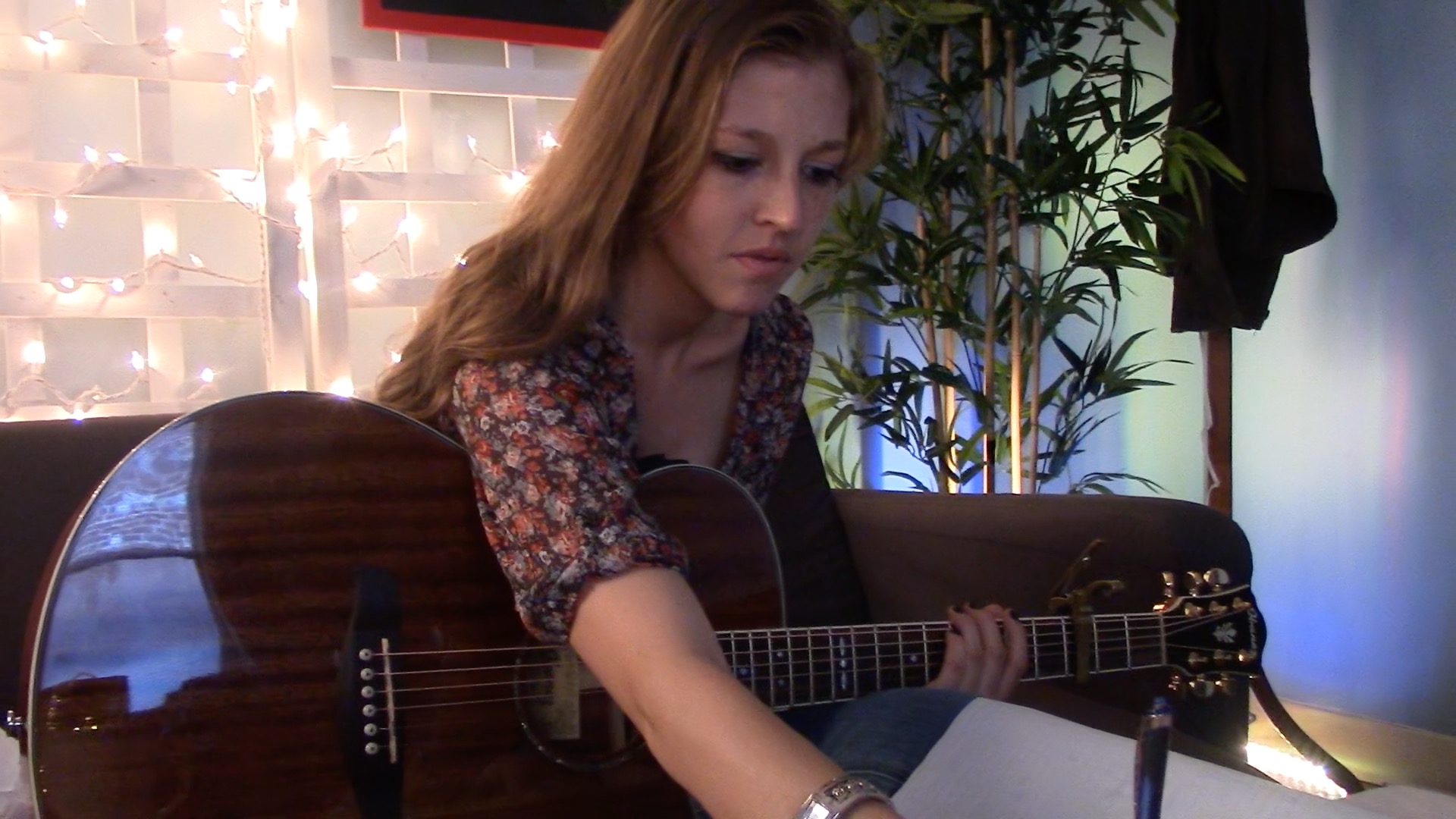
In our case, we love music, and we write music, and we were SUPER INSPIRED by the awesomeness that is Nashville. So we based our story around a songwriter.
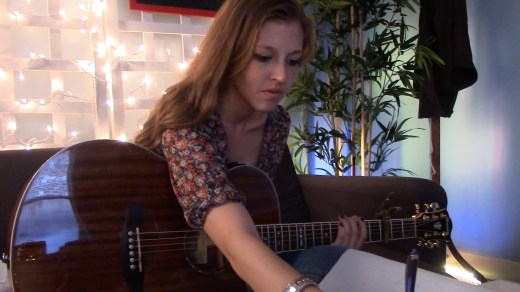
Rachel Keefe as Quinn Hardy

Rachel Keefe as Quinn Hardy

Also important!! Don’t worry about whether you have expensive cameras, a crew, or access to all your dream locations. In the end, you have to find a way to make it happen on your terms, with what you have in front of you. If you can’t shoot in a real cafe, dress a room to look like one. If you don’t have RED cameras, use a regular camera, or even your phone. Make whatever you’re using work for you in the context of the story. Write the scene or the movie, find some actors, feed them, let them do what they do best while you point your camera at them. Then edit it together and…
That's a bingo

Over the next few months we’ll be posting regularly in a lot more detail about every stage of making a short, from concept to script to preproduction to shooting to postproduction and beyond.

But for now, we’ll leave you with this. We didn’t want to sit around thinking about why no one has offered us the next Star Wars movie (side note: Lucasfilm, please offer us the next Star Wars movie) — we wanted to make something — so we made something.

And you can too.
The cold never bothered us anyway…

Now that CORRUPTED has hit the virtual shelves, we’re getting ready to gear up for book three. It’s definitely a busy time here at Croucher Towers. We’re finishing up a rewrite of the movie script we wrote last year, which placed quite well in a few competitions. We got some great feedback and notes on it, which gave us some good stuff to think about and work on… so we dived right back in to really pull it apart and put it back together again. Although the central character through line is unchanged, each of the three acts has been heavily restructured, some substantial new scenes added, and we’ve cut out a LOT of what was there before. Editing is ruthlessness. You have be cold, like Elsa. (Or Captain Cold in The Flash). There’s no room for sentimentality or “but I love that scene”. The story becomes your master and you have to obey (but not in a 50 shades kind of way). It’s a thrilling process as you clear away the lines and scenes that you realize are slowing things down, and the script takes its final, streamlined shape.

Once that’s done, the final planning for and writing of book three will begin in earnest, as we take all the ideas we’ve been developing for our characters’ arcs and work out where to add robots and aliens. WE LOVE WRITING!!! 🙂

Back to the index cards and flip charts and laptops and iPads and iPhone notes!

New YA Sci-Fi Alert! Altered Sequence Book Two Now Available!

Hey everyone. CORRUPTED, book two of our YA sci-fi series ALTERED SEQUENCE, is now available! It picks up right where ALTERED left off… And just in time for the holidays, right now ALTERED is $0.99, and CORRUPTED is $2.99. Details below!
 

Surrounded by threats, Reese wants to hide.

Erika wants to fight.

On the run, searching for safety in Detroit, Reese has never needed his father’s help more.

But his father’s past might be the biggest threat of all.

And as danger closes in, one word keeps coming back to haunt them:

Equinox.

CORRUPTED is available for Kindle at Amazon US and nook at Barnes & Noble.

Also: Buy For Kindle UK

Get CORRUPTED in paperback!

 
Altered Sequence Book One: ALTERED

ALTERED is available for Kindle at Amazon and nook at Barnes & Noble.

Also: Buy For Kindle UK

Get ALTERED in paperback!

On working: Short story published, movie script written, novel almost done!

It’s been a busy ol’ 6-8 months here in writerland. At the end of last year, we were humbled and honored when one of our YA short stories, The Place That Will Keep Us, was published in the 2013 Momaya Annual Review. Not only that, they were lovely enough to give us the third place prize! Most of the time you feel like you’re writing in the dark, not knowing AT ALL what anyone thinks of what you’re doing, whether anyone will like it or respond to it. So getting published in Momaya was a wonderful feeling. When you’re a writer, these kinds of moments form the string of lights that help you through the darkness.

The story is set in the southwestern U.S., and focuses on the son and daughter of a guitar player who are forced to go on the run and fend for themselves as they travel up into the midwest. So naturally, when we decided to adapt it into a movie script, we set it on an alien planet. With aliens. What else were we gonna do?! 🙂 We finished the script a couple of months ago, giving it the full YA sci-fi polish, and we’ve been sending it around. Fingers crossed!

Fear not, we’ve also been working on the sequel to ALTERED. Which, as of right now, is *this close* to being finished! It’s going through final edits now while we get the cover design finalized. This is always an exciting time — editing is when a book truly comes to life.

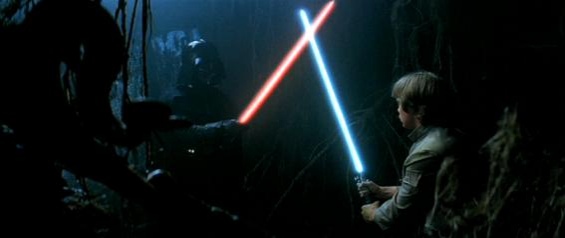
Once you’ve gotten into the actual editing, that is. Staring at the completed manuscript for the first time can be a bit nerve-wracking. In fact, the moment between the end of the first draft and starting editing is totally that bit in Empire on Dagobah where Luke faces his deepest fears and sees Darth Vader.

Facing your unedited manuscript. Scary, it is.

Facing your unedited manuscript. Scary, it is.

However, fortunately, then comes the actual process of refining, honing, cutting, adding, excavating, elevating, and many other “ings”, the end result of which is a book that you feel hopeful and excited about (as much as your writerly neuroses will let you, anyway).

So it’s all systems go right now; because, of course, book three is already calling!

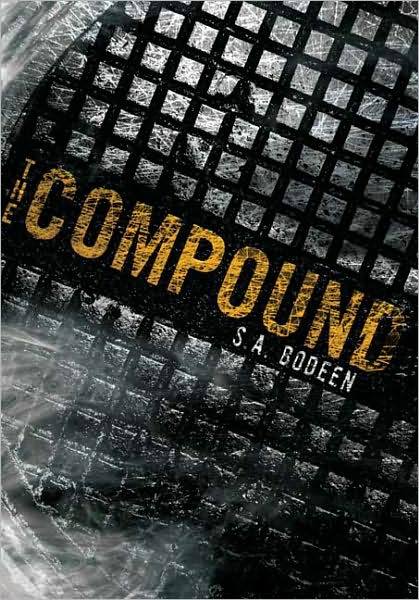
THE COMPOUND

A dystopian thriller that crackles with tension, THE COMPOUND is a stunning debut for YA author S.A Bodeen. In its content, as well as its very existence, this novel is a testament to the power of perseverance: the author wrote nine novels before this one was accepted for publication. Writers: never, ever stop. A similar truth faces Eli, the 15-year old narrator of THE COMPOUND.

The Compound

Six years ago, Eli’s family entered the Compound as nuclear war broke out across the world. Most of his family, that is. Even in the very opening pages, Bodeen delivers heartbreak and pain as not all the members of Eli’s family make it to the underground lair before the doors are sealed shut.

We jump from that first night to six years later. His family have fallen into their sanity-preserving routines, but the cracks are beginning to show, and there are dark, terrible secrets lurking in the shadows, behind closed doors and in mysterious labs. The Compound was constructed by Eli’s billionaire father, Rex. The family have accepted everything he’s told them thus far. But increasingly, things are not as they seem, and truth always has a way of making itself known.

From these few initial hints and clues, Bodeen spins a tense thriller, keeping the pace pounding and the atmosphere electrifying as Eli digs deeper into the real nature of the Compound, and why they are there. This novel races along, the characters are sharp and authentically awkward, the emotions are shocking, and Bodeen choreographs all the elements into a thrilling finale. It’s hard to stop reading, and impossible to resist immediately picking up the sequel, THE FALLOUT. If you’re looking for a great piece of YA sci-fi that thrums with the power of believing in yourself and your possible future, as well as delivering that page-turning, “what’s going to happen next?” urgency of all great YA, this is the book for you. A fantastic debut indeed. We’re lucky that Bodeen believed in herself and this tenth book enough to write it. You should believe in it too.

FORGIVE ME, LEONARD PEACOCK

FORGIVE ME, LEONARD PEACOCK is the story of Leonard Peacock’s eighteenth birthday, on which he intends to shoot his high school nemesis, and then shoot himself.

Forgive Me Leonard Peacock

Heartbreaking and life-affirming in unexpected ways, this is an unflinching portrait of how a person can feel like their humanity has been steadily stripped away from them; in this case, a teen who hopes this will be the last day of his life. It holds nothing back, and tells the truth, weaving in a vivid cast of characters in Leonard’s life as it does so, in a beautifully authentic story. It also has some fresh, completely unexpected narrative tricks up its sleeve that rock you out of your expectations, and ultimately make you feel… all the feels, as they say.

In the manner of a more snarky, introspective Jack Bauer, we follow Leonard, 24-style, as the day unfolds, class by class, hour by hour, flashback by flashback, and the pressure and tension mount. His voice is acerbic, angry, hurt, lonely, yet also witty, humane, and understanding. He’s an amazing creation. The writing, the craft on display here, is fantastic. Quick is a brilliant writer, able to take his own humanity and understanding and turn it, incredibly skillfully, into a page-turner that is completely grounded in the narrator’s inner world, as well as the perfectly evoked Philly/NJ setting.

Quick has said that Leonard’s depressed, rage-filled voice came to him when he was relaxing in Paris on his first trip to the city with his wife; it was a voice that he could not ignore, despite the beautiful surroundings, and thank goodness, because this is one of the greatest YA contemporary novels ever written.

It also proves something essential about writers: we should never, ever ignore the voices in our heads. That’s what it feels like sometimes (all the time); our stories come to us unbidden, begging for our attention. If we don’t give it to them, they can just fade away again, like lonely ghosts. Having ideas is one thing; actually grabbing them and following through on them is a whole other thing. As Pink Floyd guitarist David Gilmour replied when he was asked if he thought he was getting better at playing as time went by: “I’m not getting better, but I think I’m better at capturing the good moments and hanging onto them.” Listening to the muse and doing what she says is critical, in life as well as in writing. Like J.K. Rowling, for whom Harry Potter and the seven-volume plotlines marched into her head during a train journey — if you don’t capture and explore it, you’ll never know where it could take you.

Quick certainly captured this story, and with Leonard’s unique and transformative perspective on his life, it makes you see everything differently in yours. In that sense, it’s a book that can change the world; a book that everyone should be shouting from the rooftops about. It’s also a massively compelling, terrifying, wild, emotion-shaking ride, which is what YA needs to be (and ideally, what all literature would be). It’s amazing when all those things are true of one book. So, please, do yourselves a favor: read this now, and then go tell everyone how brilliant it is.

We Bought A Zoo: Writing, zebras, and asking “why not?”

We Bought A Zoo is such a Cameron Crowe movie, in the most awesome of ways.

Quirky, self-aware yet beautiful dialogue? Check. Heartwarming scenes that stumble over themselves to move you (and always succeed)? Check. Naturalistic, charming performances? You know it. Eddie Vedder and Bob Dylan on a (killer) soundtrack? Of course. Heartbreaking/epic use of Sigur Ros music? Duh. Awkward relationships that blossom in the end? Yep. A seemingly insurmountable situation that… well, spoiler… gets surmounted in the best, most uplifting, “happy tears” and punch your fist in the air kind of way? Hell yeah.

Basically, there is a surplus of things to love about this movie, and that’s all down to Cameron Crowe’s singular and inspiring vision.

And, as a writer, there are two added bonuses: a perfectly constructed and naturalistic script, full of character revelations, callbacks, heart, humor and forward momentum; and this most true and undeniable fact:

We Bought A Zoo is one of the best analogies for being a writer that I’ve ever seen.

Think about it: when you write, you’re basically trying to do what Matt Damon does in the movie. You take a massive leap into the absolute unknown, risking everything, while trying to wrangle a zoo’s worth of wild animals (AKA plot points, act breaks, characters etc), while rebuilding the infrastructure, moving walls, extending boundaries, deciding what to keep and what to lose (and kill), all while you constantly readjust to this ever-changing new world. So many moving parts, all seemingly with a will of their own. It’s frustrating and rewarding, despairing and uplifting, with success dependent often on the whims of outsiders, with people frequently telling you that you’re crazy (“stop just before zebras get involved”) and that you should be an accountant or work in sales; and it all builds up to the opening date, when you have NO IDEA if anyone at all will even show up. It could be the most amazing thing you’ve ever done, something that touches the lives of others and moves them, inspires them; or, it could be nothing. A lion roaring in an empty zoo with no one around to hear it still makes a beautiful sound; but it’s a lonely one.

Writers: always include the zebras.

Scarlett Johansson, Matt Damon, zebras

Crowe may not have intended this — his movie is more generally about taking that leap, choosing the thing that scares you, starting over, asking yourself “why not?” — but it mirrors the life of the writer in eerily accurate and joyous fashion. It resonates emotionally, like all his movies do, because his movies have spectacular heart. He’s sometimes/often on the receiving end of criticism that his movies are too sentimental. No. They are unashamedly sentimental, yes, but they mean it. They mean it so much and so hard and so intensely that it’s impossible not to feel it too. He writes about connections between people, the incredible joy in a certain smile at the exact right moment, the rush of taking twenty seconds of insane courage to do the thing you want to do  (for writers, that could be 20 months or 20 years of insane courage), and the extraordinary happiness when it all works out.

No cynics allowed, in Cameron Crowe movies or in writing. You just have to believe. When you inevitably ask yourself if you should continue because it seems crazy, there’s only one real response, one question to ask yourself.

Why not?