Editing

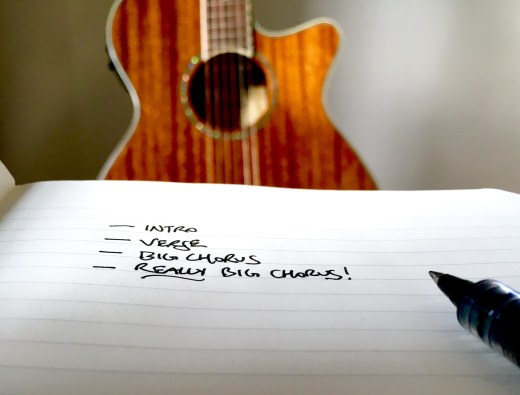
We’ve spoken a lot about that first draft. It’s the place where you let loose, write anything and everything that comes to mind. It’s the time to riff like you’re in minute 5 of a guitar solo and you just don’t want to stop. It’s the improv phase. Even if you had an outline.

So we’re going to assume you had a blast, and now you have a first draft on your screen. A big, beautiful, messy, crazy first draft.

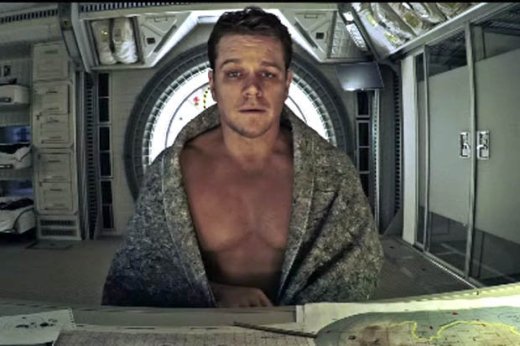
matt damon not happy martian

You, staring at that first draft like…

What now?

Now, you get ready to edit.

When editing, you’ll focus on a myriad of things: plot, character, world-building, scenes, beats, every line of dialogue… every line… every word…. We’ll look at these in more detail in future posts, but right now, we recommend doing what will feel so unnatural to you: set that first draft aside for a while.

Not for too long — you don’t want to lose your momentum — but you need to give yourself time to recharge, refresh, and, most importantly, readjust your thinking. This time away can be whatever you need: finishing an episode, or season, or — let’s be honest — a series, on Netflix, having a get-together with all those friends you’ve been neglecting since you were captured by your muse, or just a long walk to see what the world outside of the one you just created looks like.

It’s also not a bad idea to take this time to clear your schedule. If your first draft is a 50 yard dash, editing is the 26.2 mile marathon and you’re going to need to set aside time to keep up a good pace.

The first draft was the raw material. Editing is engineering, where you hone and craft and rebuild and shore up and make sure your story has narrative load bearing walls… ok, enough construction metaphors, but you do have to think that way a little bit.

Now you have to roll up your sleeves, and  get ready to make thousands of changes.

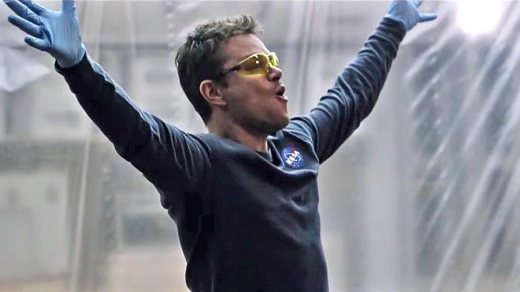
Oh yes. Remember when in The Martian, Matt Damon is facing a terrifying, unwieldy, seemingly impossible situation, and his response was how he was gonna science the shit out of it? That’s you, right now.

matt damon martian happy

You, solving a narrative problem while editing. Promise.

You kind of want to go back to Netflix right now, don’t you? Resist the urge! You can celebrate with Orange Is The New Black (or your fifteenth Gilmore Girls rewatch) when you finish your second draft.

For now, trust that you work has genius. It’s there, glorious and beautiful — you just have to bring it to light. Put on your shades, because now it’s time to get to work…

tom cruise sunglasses

First drafts

You came up with a great idea.  A killer idea! You made some notes in your phone, or your current favorite writing notebook, on post-its, old envelopes, or even on your laptop. You pictured scenes while listening to awesome songs.You can imagine the movie version so clearly! (that guy from Teen Wolf would crush the lead role, right?)

Tyler Teen Wolf

That one

There’s just one teeny, tiny technicality: you have to actually write the damn thing.

Which is where the beautiful, messy pain of first drafts comes in.

Whether you’ve put together an outline, like we talked about before (which makes the draft your second step), or whether you’re an organic-style improviser and this is your first time putting words on a page for your story, you still need to get your raw material together. Outline or not, roadmap or not, you still need to start this journey and tackle a first draft.

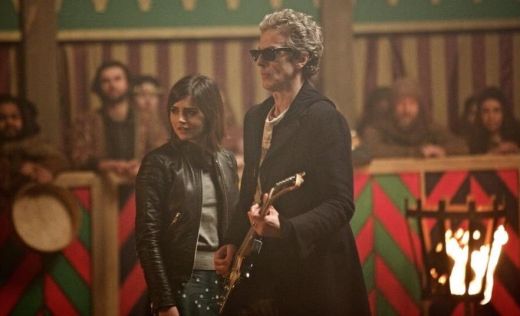
And oh, that first draft is a complex beast for us writers. On the one hand, it’s truly amazing: you can write ANYTHING YOU WANT. You’re free flowing, improvising, letting those gorgeous ideas flow right from the muse and onto your page. You can write [make this better] and [funny line here] and [science this later], and that’s okay! You can write alternate versions of the same scene, or of the same line of dialogue. You can write out of sequence. You can write whatever you want. 


Doctor Who guitar

This is what first drafts feel like. Cool.

The key thing is, you’re WRITING. You’re getting your story down. Even more than that, you’re putting the heart and soul of your story on the page (the body and brain of it will show up later… right now you’re dealing with the essence of your story).

This is where we turn to that pesky other hand.

It’s probably not very good.

There. We said it. #SorryNotSorry

Your dialogue probably won’t be diamond-sharp or leaping off the page with fresh, vivid originality. Your scenes likely won’t start or end the way you want them to. Your characters might not do the things you need them to do. There will be lots of those comments like [make this better]. Everything will be really, really messy. Mind-bogglingly messy. At the exact midpoint of cleaning out your closets messy, when apparently everything you own is scattered all around you and NOTHING MAKES SENSE ANYMORE. It’s like you’re building a house, and this is the stage where it looks like you’re actually destroying one instead. Basically, it will feel like you  have no idea what you’re doing.

But here’s the thing. It’s all okay. Why, you ask? How could all that possibly be okay?!

Because that first draft is actually PERFECT.

Wait, what?

Yep. It’s perfect, because it contains everything you need to make a wonderful, amazing story. All your jumping off points are there. Your characters are there. The things they need to say are there, in one form or another. And, most importantly, the solutions to pretty much all your narrative problems are going to be there too. You just might not realize it. This is why it’s so important to NEVER EVER EVER CENSOR yourself when writing a first draft. LIKE, EVER. If it comes into your mind, put it on the page.

Everything you write is a clue or a seed or a possibility. You might find, when you’re editing your big finale, that you need a thing, or a character, or a piece of information. The great news is, whatever that thing is that you need, it’s probably lurking somewhere earlier in that first draft. Because first drafts are perfect, gorgeous things.

No story can exist without a first draft. Having an ungainly, unwieldy mess of a document is an incredible thing, because it means your story is now on the road. It didn’t even have wheels before and now it’s rolling down the writing highway. It still needs a few other things (by few we mean like, thousands), but it’s on the move, and you can see that signpost up ahead that says Editsville is the next stop). As Shannon Hale said, writing a first draft is like shoveling sand into a box so that you can build castles later. You can’t build a sandcastle without the sand, people. The first draft gives you all the raw material you need. And it’s exhilarating.

But trust us… it’s not as exhilarating as the next phase: editing. This is where your story’s soul will be crafted, finessed and sculpted into something cleaner, shinier… gleamier? The soul will not change. You cannot break your story and you cannot break its soul. Editing will take it to a higher plane of existence, man.

Jeff Bridges Tron Legacy

Yeah

But we’ll talk about that next time. For now, luxuriate in knowing that you managed to put an entire version of your story on the page.

You’re amazing!


Organic vs. outlining

There are an infinite number of ways to be inspired, but when it comes to putting your story down, you’ll have to choose between two approaches.

The first is the organic approach. That’s where you just write. Ideas, characters and story unfold with each keystroke. If you’ve ever had to improvise an all-new story for an insomniac child, where you surprise yourself with every new plot twist that comes out of your brain without you even knowing it was there… it’s like that. Only, you’re the one asking, what happens next? Continuity, character development, setting and so much more can be added and finessed in the next draft(s). (Spoiler: there will be many drafts). You can think of this as the riffing stage. You’re just picking up your guitar and noodling around, letting licks and riffs and chord progressions fall out any which way while you record it. This is strictly inspiration only. And it’s kind of awesome.

Doof Warrior

Any excuse to use this photo again. Hypothesis: the Doof Warrior does not outline

Working on pure impulse is fun. It’s almost meditative, a trance state. But it leaves a lot of the hard work for the drafts that follow. It’s like making dinner with whatever you grab from the fridge — you’ll have to clean up all those tubs and plates afterward. Same with writing — you grab any ideas that come your way, and it feels great. Just be aware that later, you’ll be in front of your metaphorical kitchen sink for a long time scrubbing.

(Quick sidebar: your first draft will always be a messy, unwieldy beast. You’ll probably hate it. But think of it this way: your first draft is PERFECT! Yes, we said it. Perfect. Why? Because it contains everything you need, and a lot more besides. You’ll be surprised just how many future narrative problems will be solved by seemingly random things from that out of control first draft. This is why you should never, ever censor your first draft.)

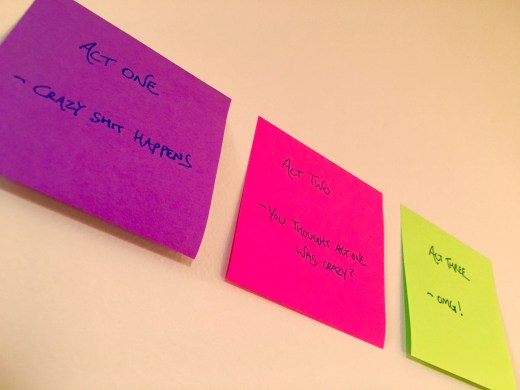
If the dread of that massive cleanup prevents you from enjoying the meal, then rejoice, for there is another way: the outlining approach might just be the best thing for you. This involves creating an outline of your entire story. You’ll work out your characters’ arcs in advance, then determine what story beats you’ll need to further those arcs. You’ll break out what your acts are (e.g. three acts for a movie or novel, 5 or 6 for a network TV script), and how your character development and action flows through them. This is the blueprint of your story. The “what happens next” of it, which is often what prompts hours of looking out the window instead of at your screen. With an outline, you have what happens next. When you go to start actually writing the story, you’ll get into the “how it happens” phase.

Outline notes

We’re patenting this story structure

Creating an outline, whether in a notebook, on post-it notes, index cards or flip charts, can save so much time when writing and editing. (If you don’t outline, and use your first draft to work out what your story needs to be, you’ll potentially have a lot more heavy-duty rewriting and restructuring to do in draft two). It can also help inspire your story as you write. We’ll be honest, it’s not the most fun part of writing. Like making a film or recording a song, the prep work is important and saves you time and energy in the end… but it is work.

So, what does outlining look like?

In its simplest form, it’s you working out and writing down ahead of time who your characters are, and what happens to them. A good place to start is with your main character(s) — who are they, and at a high level, what is their arc? Are they good, and going bad? Vice versa? Are they discovering something about themselves that changes their lives forever? Where will they be at the end, and how is that different from the start? Once you know who you’re writing about, and the basic emotional/psychological journey you want them to take, you can think about what needs to happen to get them there. This is focusing on character first, and using that to determine plot. As you do this, your other characters can come into play — who will help your protagonist, and who will get in their way? Who is their nemesis, their enemy? What are all of their arcs? Because all your characters should have some kind of arc or journey that they’re on. This keeps them from becoming cardboard cutouts that you’re just moving around for the sake of the plot.

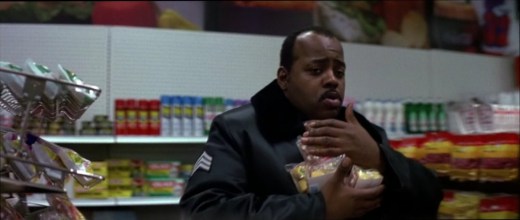
It doesn’t take much to give your characters depth and nuance. Look at Sergeant Al Powell in Die Hard (which is possibly the most perfectly constructed piece of pop culture of all time — all the writing lessons you’ll ever need are in that movie). Al joins the action in Act Two. He could have just been a random cop without much going on other than being a device to ask John McClane questions to help keep the audience in the loop. But he’s so much more than that. It starts with his intro: he’s in a gas station buying twinkies when he gets the call to go to Nakatomi Plaza. That detail on its own is something, but it wouldn’t have been enough — but we get the spin — they’re for his pregnant wife, which adds a layer of “we don’t want anything to happen to him!” and also allows for a brief joke with the guy behind the till. That scene is at its core “cop gets the call,” but now it’s full of little details and dimensions that help give his character a little something more (and give the actor something to play).

Al Powell and Twinkies

Al. And the Twinkies.

This continues for him throughout the movie — and it’s not just adding random details either — each piece of his story means something to the movie, and to his arc, and to McClane’s arc. Your homework is to watch Die Hard and analyze how they make Al relatable, accessible, interesting, and, with his backstory and arc, utterly necessary for the movie to succeed.  Then think about how you can do this for your “minor” characters — because really, none of them are truly minor. If they are in your story, they’d better have a good reason to be there.

Al Powell Cop Car

From Twinkies to ringside seat at Nakatomi Plaza: character development very much pictured

Once you have your main character and their arc, and some of your other characters, fleshed out, and you’ve worked out what your basic story could be, then you can drill down to the next layer of outlining: breaking that story down into more manageable units. It’s helpful to think of your story in acts, whether it’s a movie in three acts, or a TV show in five or six. You can start deciding which pieces of story might go in which act. The ends of your acts will need to push the audience dramatically into the next act, whatever kind of story you’re writing. Once you have that, you can drill down again, to the level of sequences (composed of scenes), and individual scenes. For a novel, you can do this, and also be thinking about chapters too. Where will your major story points occur? Where (and how) will you reveal information to your readers/audience? You can chart this in many different ways — whatever works for you is what you need to do. As you start seeing how you scenes and beats can be laid out across your story, more of the story will come to you.

That may all sound too clinical or analytical, but just because outlining like this involves a lot of discipline doesn’t mean that it has to diminish your artistic flow. Outlining is the halfway house between the riffing stage, and the engineering stage that is editing. You’re still improvising as you lock down your story’s structure, you’re still feeling out those characters, and thinking of cool shit for them to do… it’s just a more organized kind of riffing. And once that outline is locked down, you can just dive into the writing and not be held back by not knowing where your plot needs to go — you can make that first draft really sing and get inspired.

And remember, there’s always discovery. You always have to be open to the cool idea, the new direction. The outline is there to make the process easier — but it’s not necessarily set in stone. You may find that your story needs to go in a different direction, and that’s OK. You can just update the outline, and keep on trucking.

Different approaches work for different writers, sometimes on different projects. What worked for your novel may not work for your screenplay. The key thing is that you find the process that works for you. The way of writing that gets you to the promised land of actually finishing what you started.

And that’s the ultimate goal: whatever your story is, you thought of it, which means that you can finish it. Your creativity isn’t that cruel — if your muse delivers a beautiful idea to you… trust her. She wouldn’t send it your way if you weren’t capable of executing it (the idea, not the muse!).

Do what’s right for you as a writer. And see it through. Don’t exist in a dense forest thicketed with unfinished projects. Make your writing life clear and open by turning those beautiful ideas into beautiful realities. It feels good.

Finding inspiration

Sometimes reading about the craft of music and listening to the best of the art form is enough to spark the creative flame of songwriting. Other times, you find the beat and the words flow as if they were forged together. Then there are those moments no writer wants to think about. When the words just aren’t there. You can sense them in the distance, but they won’t venture close enough to grab. Like your cat when it’s time to go to the vet.

Call it what you will, writer’s block, being creatively stymied, Twitter time, Hell… whatever you name it, there is only one cure for it.

Write.

Just write.

Play through the pain. Even if it’s crap, write until it’s not. Obviously, this is much easier to say than do. Nothing is as daunting as a blank page, or a cursor slowly flashing in a way that is surely mocking you, like a slow clap for your lack of words. Thanks, cursor. But inspiration is a tricky thing. It comes in all sorts of forms, from a picture to a phrase to a feeling, and you have to be open to catch it before it passes by.

Cursor

The tyranny of the blinking cursor. Sarcastic attitude very much pictured.

While songwriting has to speak the truth, it doesn’t have to be pure autobiography. It can be, sure — Taylor Swift has brilliantly tapped the resource of her broken heart and connected with millions — but you don’t have to use your romantic crashes and burns to create a connectable song. It’s not a bad thing, as TayTay and Adele would agree, but it’s not the only way. You don’t have to translate the ins and outs of your journal into verses and choruses, but you do have to invoke your feelings: Loyalty. Trust. Love. Betrayal. Shame. Hate. Jealousy…

In a writing class many years ago, a fellow student read their work out loud. It was a short story about fickle love. It was brutal to listen to. The honesty of how it feels to be in the warm glow of love, and the soul-crushing shadow that steals  your soul when it’s taken away, hit a nerve with everyone who heard it. After the piece was done, everyone asked the author if he was okay — assuming he was in Adele proportions of heartbreak. Turns out he was fine… he wrote the story about his cat.

Smug cat

Smug bastard.

You don’t have to bungee jump off a bridge to convey the fear of falling and the relief of being saved at the last moment. We’ve all been there in some way or other, that train you thought you missed, that time you tripped and almost fell but steadied yourself in time. Use those feelings and create a story for them. Use whatever is around you and write about it. And keep writing until you hear your story’s beats.


Writing songs: make us feel it

Every writer knows that if you want to write a novel, you have to read a lot of books. And not just in your genre — you have to venture into all of the categories of your kindle. It’s the same for songwriting. In order to understand the craft of putting a song together, you first need to expose yourself to as much music as you can. Keep listening until you can hear the musical and lyrical structures of the nearly countless variations of songwriting out there. And then listen some more.

Whether it’s pop, which currently tends to have simpler, more repetitive lyrics over intense production, or rap, which usually focuses on telling a story over production-heavy loops and beats, or country, which almost entirely tells stories via vivid imagery and hooks, sometimes with a stripped-down sound, sometimes with arena-ready production gloss, you’ll learn the many nuances of songwriting from all of them. All kinds of styles are calling to you; let them in.

Listen then write

As you jump out of the For You section of your streaming service, you’ll notice almost all music shares one objective: emotion. Every song wants you to feel something. And to do that, they tell a story, whether it’s in one chorus chanted over and over again, or in an epic poem type style that provides you with characters, locations, events and even a timeline.

We’ve grabbed some of our favorite songs that tell stories in an original way, with inventive use of rhymes, imagery and phrasing. Add them to your playlist:

Chris Stapleton, “Whiskey and You” (written by Stapleton with Lee Thomas Miller). The opening line says it all: “There’s a bottle on the dresser by your ring, and it’s empty so I don’t feel a thing.” You have the whole story right there — that’s economy of imagery and phrasing. The rest of the song uses the differences between “whiskey and you” to say how the singer feels about his ex. It’s concise, hyper-effective storytelling using whiskey as the vehicle to attack his true feelings.

Kacey Musgraves, “Dime Store Cowgirl” (written by Musgraves with Shane McAnally and Luke Laird). Musgraves takes an insult screamed at her by another girl’s mom when she was a kid, and turns it into this statement of intent and identity. The phrase itself is evocative and catchy, and she weaves it into a stream of memories as she doubles down on where she’s from (“it don’t matter where I’m going, I still call my hometown home”).

Eminem, “Stan” (written by Eminem, Dido and Paul Harmon). One of the greatest examples of storytelling in rap, or any genre, this bleak but brilliant track is narrated by Eminem as Stan, one of Eminem’s biggest fans. It details Stan’s descent from happy fanboying to homicidal rage as his idol seemingly ignores all his attempts to get in contact. At the end, Eminem raps as himself again. The track is full of psychological and emotional moments that vividly illustrate Stan’s journey — Stan rationalizing that Eminem probably didn’t get his letters because his handwriting is too sloppy, Eminem ignoring Stan and his little brother when they were waiting in the cold outside one of his concerts, Stan laying out how he and Eminem are the same, even as Stan’s rage begins to creep into his phrasing more and more. It’s a masterpiece of sharp, memorable imagery used to convey a complex series of emotions, and to track a psychological breakdown.

Jessica Roadcap, “Always Find Me” (written by Roadcap, David Dorn and Rose Falcon). Roadcap uses a sparkling flow of imagery to detail her failed attempts to escape a memory: a fast car, an ocean, running, hiding, breaking free, Vegas, one night stands, ghosts… but always ending up realizing, “your memory always finds me.” This is how you take a hugely relatable feeling (wanting to forget the love of someone who’s gone) and make it instantly evocative to the listener using well-chosen imagery.

Beyoncé, “Single Ladies” (written by Beyoncé, The-Dream, Kuk and Christopher “Tricky” Stewart). This falls into the category of anthemic statement of intent, with its heavily repeated call to “all the single ladies” over a stuttering, relentless beat. It makes its point in pointed fashion, with its poetic “you had your turn, and now you’re gonna learn, what it feels like to miss me,” and its instantly iconic, “if you liked it then you shoulda put a ring on it,” which distills the meaning of the entire song into one bladed phrase.

Keith Urban and Eric Church, “Raise ’em Up” (written by Tim Douglas, Jaren Johnston and Jeffrey Steele).  That title is used in a multitude of ways that get ever more profound: raising your glass in a toast, your hands in prayer, your tear-filled eyes up to the sky, your kids as they grow up. It’s a beautiful song that transcends that simple phrase by layering on the meanings.

Howlin’ Wolf, “Smokestack Lightning” (written by the Wolf). A classic, old-time blues, this uses a ruthlessly stripped-back image to drive the song: the sparks coming out of the smokestack of a train rushing past into the night (“smokestack lightning, shining just like gold…”). That becomes symbolic of the relationship that the character is losing (“where did you sleep last night… why don’t you hear me crying…”). Even musically, the song sits in one hypnotic chord throughout as the image is used again and again, making this in some ways a precursor to modern pop (we’ll take that Pulitzer now).

Whatever genre you listen to, the lessons of the best are clear: choose unusual imagery that hooks you in and tells you a story in its own right; play with words and phrases, layering in more than one meaning to give a song more depth; give your words a dynamic rhythm that sticks in our minds; but above all, keep it authentic, keep it true, keep it relatable, keep it real.

Make us feel it.


Books about songwriting

Sometimes putting a song together is easy — like when you beatbox to your pets as you put out their food. (Don’t worry, we don’t judge and they don’t judge… unless they’re cats, because, you now… cats.)

But if you want to put something together that will please more than Mr. Wooferson’s floppy ears, a little research is recommended. Songwriting is an art and a science, and you can study it just like any other art form. Anytime you’re reading about writing (songs, or novels, or scripts), you’re learning and getting inspired. You can’t stop it; your brain loves this stuff!

Here are three books that we’ve found particularly useful and inspiring when it comes to country music, but to be honest, most of what you’ll find here could apply to any kind of musical storytelling.

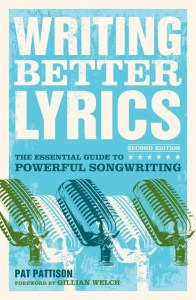
First up, we have Writing Better Lyrics, by Pat Pattison.

Writing Better Lyrics

This is a sharp, insightful, unflinching, not-taking-any-of-your-BS look at writing lyrics. It’s jammed with great perspectives and exercises to help you get out of the familiar and easy pattern, and find genuine and fresh inspiration. Whatever level you’re at, you’ll find something here that will jolt your imagination. It’ll get you thinking about lyrics, choruses, verses, the flow, and even words, in a different light. Whatever genre you write in, this book will have something for you. If you’re struggling through writers’ block, try one of Pattison’s exercises — you’ll be writing a new song before you know it.

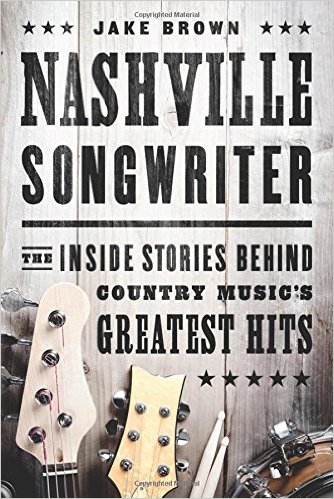
Next up, Nashville Songwriter, by Jake Brown.

Nashville Songwriter

This is a fascinating series of interviews with some of Nashville’s finest and most storied songwriters, talking about how they wrote some of their biggest songs. If you want to learn about the process of songwriting, you go to the source: Merle Haggard, Ashley Gorley, Kelley Lovelace, Chris DuBois, Whisperin’ Bill Anderson, John Rich, Sonny Curtis, and many others. They each talk about the moment of inspiration for one or more of their hits, the way their initial idea was sketched out into the bare bones of a verse or two, before finding the chorus, then re-finding it with new inspiration, and how they got through to the final hit version. These are the people doing the work, talking about how they do the work. Even if you’ve never heard of some of the writers or songs, you’ll learn something about the many different ways that songs come into being.

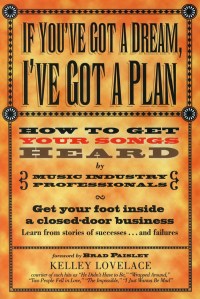
Lastly, and more specifically focused on Nashville, is If You’ve Got A Dream, I’ve Got A Plan, with the epic subtitle How to get your songs heard by music industry professionals and get your foot inside a closed-door business. Damn!

Dream

It’s by the aforementioned Kelley Lovelace, who has cowritten many of Brad Paisley’s hits. It’s over ten years old now, but its core principles remain true. Lovelace looks at the business of writing songs in Nashville (and outside if you can’t move there) from top to bottom, giving useful insights into the mechanics of the country music industry, including writing, cowriting, pitching, open mic, royalties, and much else. Lovelace knows the industry from the inside out, and writes in an engaging, accessible and inspiring way.

These are just three — there are whole libraries of books about songwriting, as well as, of course, the internet. You can find countless interviews with songwriters recounting their moments of inspiration and the detailed process of how they shaped their song. Taste Of Country has a great series called Lyrics Uncovered on its site. This installment focuses on how Kacey Musgraves, Shane McAnally and Brandy Clark wrote Musgrave’s hit Biscuits. Check it out, then take a look through their archives.

What it all comes down to is this: keep exploring. That’s the best way to grow and to stay inspired, which means you won’t only be impressing Mr. Wooferson, you’ll also be ready when the muse comes knocking on your door.

Songwriting and storytelling

We’ve focused a lot on movies and novels in previous posts, but there’s another kind of storytelling that drives a lot of what we do: songwriting.

Writing a song

We love all kinds of music, whether it’s the beautiful inventive craziness of pop, the gritty edge of rap, the straight-up epic-ness of soul, or the gorgeous storytelling and soul-baring of country music. The through-line for us is songs that tell us stories, whether it’s a verse by verse evolution of things happening, or the evocation of an emotional moment in time. That kind of songwriting is a very precise form of storytelling, even more so than a short story, which is one of the most precision-based ways to get a story across, given the lack of time and space. Characters, situations, emotions, arcs, set-ups and pay-offs all need to happen immediately. Just as with short stories, there’s no runway with a song; you need a vertical take-off for the tale you’re telling. You have to grip the listener from the start with vivid, specific imagery that resonates. You need to use whatever tools you can to grab us and hold us close. Clever analogies, innovative wordplay, a flow; there’s a lot more in common with rap and country than you’d think.

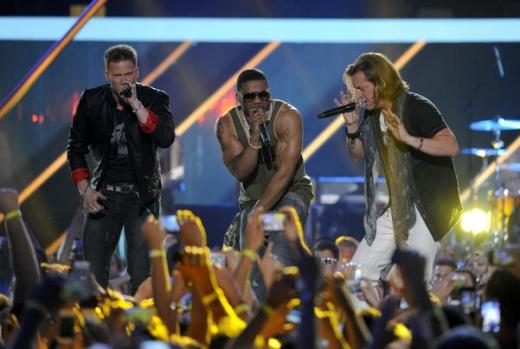
FGL and Nelly

Florida Georgia Line and Nelly, rapping and… country-ing?

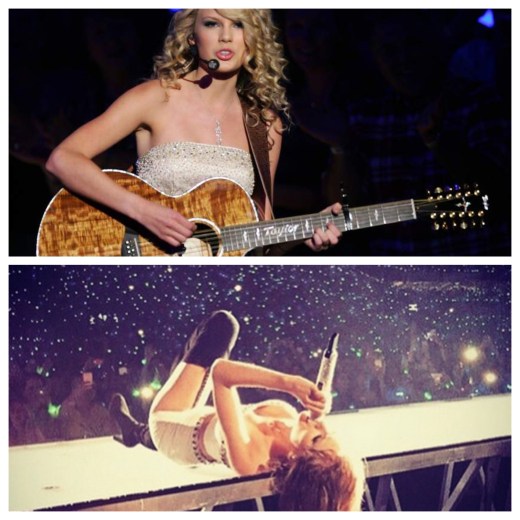
For us, the nexus of this kind of songwriting is Nashville. Dive deep into country music, and you’ll find everything you need to know about songwriting. It’s no coincidence that Taylor Swift, who has spent the last 15 months dominating the world with the epic, glossy, futuristic, confessional pop of the 1989 album and tour, learned how to get there by writing country songs.

Taylor Swift

Great country songwriters transport you from the first line, and grip you until the last (and beyond): Eric Church, Mark Irwin, Shane McAnally, Kelley Lovelace, Miranda Lambert, Jessica Roadcap, Kacey Musgraves, Chris Stapleton, Ashley Gorley, Chris Dubois… They tell heartfelt, vivid tales, wrapped up in hooks and melodies. Here are two examples of how to tell a story through verses and choruses (listen to the way these songs are constructed, the way they phrase the things they say, the way imagery is set-up and paid-off):

Miranda Lambert, “Automatic” (written by Lambert with Natalie Henby and Nicolle Galyon). This digs deep into a nostalgic vibe, and does so by brilliantly layering meaning upon meaning on the word ‘automatic.’ The theme of the song is yearning for a time when you had to work for what you got, whereas now everything’s just automatic. Analogies flow fast and smartly, as do memories of taking the long way around (ironically, given the speed with which they poetically hit the theme). Driving stick, taking photos (“the kind you gotta shake”), writing letters… very specific experiences become universal as Lambert reaches out for a time “back before everything became automatic.”

Tim McGraw with Taylor Swift and Keith Urban, “Highway Don’t Care”, (written by Mark Irwin, Josh Kear and Brad Warren). Irwin and his co-writers do something very smart here, taking the chorus of a song that the character is listening to on the radio, and making it the chorus of the song itself. It adds another dimension to this story of someone driving angrily away from a row with their loved one, which is already made unusual by being from the POV of the person being driven away from. It’s a flawless example of how to take a story, and tell it in a fresh way, from a fresh angle. Irwin and co.’s approach gives the song life and heart; using the highway as the anchor for the song (“the highway won’t dry your tears, but I will… the highway don’t care, but I do”) makes it grab you. It’s not just someone telling you they care; it’s poetically constructed, which gives it more impact.

Smart analogies, vivid imagery, clever, complex and concise phrasing and construction: these themes reverberate through a good story and make for great music. It sounds analytical, and maybe even cold, but all this is the foundation on which beautiful, rich, heartfelt and soulful art is made.

Things We Like: Illuminae (The Illuminae Files 01) by Amie Kaufman & Jay Kristoff

Every so often, a book comes along that makes you want to retroactively drop the ratings of pretty much all your books on Goodreads by a star, because now you know what five stars really looks like (pretty much all; not actually all… *cough* JK Rowling and Patrick Ness and Laini Taylor are exempt *cough*).

ILLUMINAE is that book.

Illuminae Ray V6FrontOnlyA2A_V3.indd

It’s a five star book. Really, it’s six stars. All the stars, in fact, and appropriately enough, because this is, simply put, a rollicking, gripping, adrenalin-rushing, heartrending and emotionally bad-ass space novel. It’s YA sci-fi, in space, and then some. No spoilers here, but the novel opens with an attack on a remote mining outpost, deep in space. The occupants scramble to escape as space fights erupt in the skies above.

Space fights, people. Space fights.

The survivors make their escape on three different spacecraft, but the attackers won’t give up so easy. The rest of the novel unfolds from there in a relentless and thrilling story that Never. Lets. Up. It keeps evolving, spinning, reversing, tricking you, lulling you, surprising you, breaking your heart, and you JUST CANNOT PUT IT DOWN.

Seriously, when a book contains awesome space stuff and what scientists are describing as ALL THE FEELS, how can you be expected to live your life and go about your normal business?! You can’t — you can only keep reading as the authors build and build their tension to unbearable levels… and then keep building it some more.

And then some more.

Essentially, this book checks every box you could think of, and plenty that you would never imagine. It goes way beyond what you’d expect: it has pictures, diagrams, beautifully creative layout and typography. Its form often reflects its content in a poetic, mesmerizing way; it’s endlessly creative in the way it presents its story. And it’s not a gimmick that it does this, or that it’s composed of emails, surveillance reports, IM chat transcriptions, etc — it’s entirely necessary, and with a story as unstoppable as this one,  you barely notice that this isn’t a traditional narrative.

ILLUMINAE is something we’ve never seen before, and Amie Kaufman and Jay Kristoff need all the praise for that. They are amazing writers who know how to tell stunning, emotional and epic stories. They’ve made something extraordinary here.

Here are some awards that this book wins:

  1. Best space scenes in YA sci-fi (intergalactic travel, awesome spaceships, insane battles, the majesty of the universe, etc)
  2. Best use of nonstop, brutal sarcasm in stressful situations
  3. Most thrilling novel of 2015
  4. Coolest novel of 2015
  5. Most “when you’ve finished, turn back to page 1 and read it again” novel of 2015
  6. Best Artificial Intelligence in popular culture since HAL in 2001 (that NEEDS to be voiced by David Tennant in the Brad Pitt-poduced movie adaption)(seriously, Brad Pitt is producing the movie adaptation)
  7. Best Brad Pitt movie adaption of all time (to be awarded at some point in the future)

Rating: 

Six out of five space battles

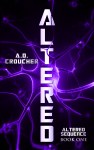
ALTERED and CORRUPTED new covers alert!

We’re really excited to reveal all new covers for ALTERED and CORRUPTED! Here they are… feast yer eyes on these beauties!

ALTERED cover

CORRUPTED cover

We love them; they really capture the tone and feel of the books. We hope you like them too! If you want to find out more, check out the details below!

ALTERED cover


ALTERED: Buy For Kindle US

ALTERED: Buy For Kindle UK

ALTERED: Buy For nook

ALTERED: Buy Paperback

ALTERED: Buy For Kobo


ALTERED is book one of the YA sci-fi series ALTERED SEQUENCE.

Reese has a plan: keep his grades up, work hard on the basketball court, apply to his favorite Ivy League college, and don’t get arrested.

There’s just one problem: Reese knows things no one should know. He always thought he just had good instincts, but he’s noticed that it’s been getting worse. Lately it seems like something else.

Something more than instinct.

And he’s not the only one that has noticed.

They’ve been waiting.

Watching.

And now it’s time.

With his life in danger, Reese needs a new plan:

Escape.


CORRUPTED cover


CORRUPTED: Buy For Kindle US

CORRUPTED: Buy For Kindle UK

CORRUPTED: Buy For nook

CORRUPTED: Buy Paperback

CORRUPTED: Buy For Kobo


CORRUPTED is book two of the YA sci-fi series ALTERED SEQUENCE.

Reese and Erika are on the run in the shadows of Detroit.

They need to find Reese’s father, because hard as it is to admit, Reese has never needed him more.

But his father’s past might be the biggest threat of all.

They thought Wilcox was the real danger, but others are hunting them too. And Reese and Erika have no idea just how lethal those hunters can be.

As they try to keep each other and those they care about alive, one word keeps coming back to haunt them: Equinox.

Rewriting your short film script

When you first start writing your script, you should censor… nothing! Let the ideas flow, let the characters do something crazy. Think big, dream big… all that good stuff.

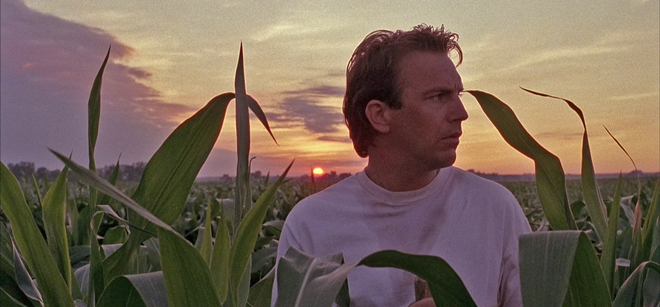
You need to get all Field Of Dreams up in here... if you build it...

You need to get all Field Of Dreams up in here…

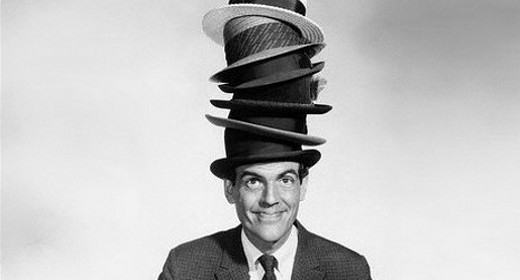
When you’ve finished that first draft though, you’re going to need to switch out of writer mode and put on a different hat.
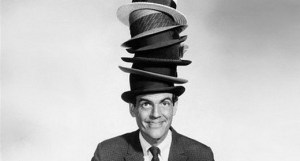
Spoiler: there's more than one hat

Spoiler: there’s more than one hat

Several hats, actually. The first is your editor hat. With any type of writing, you need to go over your work and approach it with unnerving, surgical precision, cutting away and removing things that you couldn’t possibly imagine losing but that the piece will be much better without.

You, editing

You, editing

It’s often brutal, always necessary. If something is slowing your story down, making it too long, or is tonally off — snip snip! Once you have a tight script, in which every word is weighted with pivotal importance, it’s time for a wardrobe change as you look for your set designer hat.

This is where you have to evaluate your script on the basis of what the director (spoiler: this is you just with a different hat) can actually, practically shoot. This means dealing with the reality of your situation. If you set your script in a cafe, or a store, or an airplane, do you actually have the ability to (a) shoot in a real cafe, store, or airplane, or (b) recreate the interiors you need using creative set design (see our previous post)?

Shooting in a real location, such as a cafe or store, involves getting permission from the owner and working out all the details with them. Most will only let you film after hours for a set period of time, and they may insist their employees are present to keep an eye on things… which could be costly. They may let you use the location but not their materials — meaning you’ll have to bring in your own props (mugs, coffee machine, etc.). Along with props, you’ll need to bring in lighting and, if the script calls for them, extras. There are a lot of logistics involved with real locations, and depending what your relationship is with the owner, there could be insurance issues involved as well.

But don’t let this deter you!

The golden rule of making short films is that it NEVER hurts to ask. Just be polite and make sure they are comfortable with every aspect of your set and production. Don’t paint a wall or move a table without clearing it with the owner first.

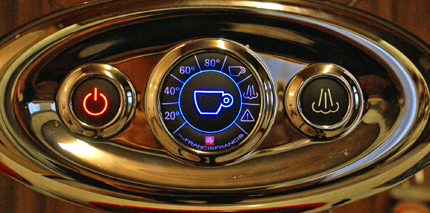
If you do manage to make a deal and secure a real location, and get the limitations worked out, you’ll have to put your director hat back on (retroactive spoiler: you were wearing your producer hat in the last couple of paragraphs) and work out your shot list. That’s basically a list of all the places you want to point your camera — we’ll cover that in a later post.  A shot list will help you as the set designer figure out what will be in the scene. If it’s not exactly as the script described — you can’t have your lead character cleaning out the uber-expensive espresso machine because part of the deal with the owner was no touching anything that cost more that the coffee you were buying the cast and the crew — then you’ll have to change your script.

Sometimes it’s as simple as a tweak to an action sequence (e.g. instead of running across rooftops, your chase takes place on the street), but if that espresso machine represented all your character’s hopes and dreams of one day moving to Italy (and your short was a beautiful yet melancholic ode to the poetic symbolism of said machine, which actually sounds kind of cool!), you’re going to have some serious rewriting to do.

It's so pretty...

It’s so pretty…

Being unable to get a location you were hoping for, like getting turned down by American Airlines to make your movie on a 747, doesn’t mean you have to toss your script out the window. First, that’s littering and we would never encourage that, and second, it’s all part of the process, baby. With your set designer hat back on, you’re going to have to look around at what you can do. Is it possible to recreate the interior of an airplane? How about just the tiny space where the flight attendants hang out as they load the drink cart and talk about that rude bastard in row 23. All you need is a cart and a ridiculously small room.

If your original script had a flight attendant who’s scared of heights walking down the aisle, dealing with one flyer after another as she/he rolls past the rows, you’ll have to put your writing hat back on and change the dynamics without losing the tone, or the essential point of your story (it’s surprising how well the point of your story can survive intact through huge rewrites). Having the flyers approach the attendant as they load the cart instead could be a quick solution, but if it’s not as funny, or seems too contrived, you’ll have to dramatically change the scene, and possibly even aspects of the characters. If you changed the setting to a bank, for example, where customers are more likely to approach a teller, your bank teller being afraid of heights wouldn’t be so impactful, and any callbacks to that fact would have to be removed from the script: anytime you make changes, it’s a ripple effect.

Any excuse to reference Jurassic Park...

Any excuse to reference Jurassic Park…

This is the messy art of rewriting.
Seriously, it's messy

Seriously, it’s messy

Sometimes you might need to lose the scene altogether. In that case, you’ll have to make sure the important information in any cut scene is dispersed throughout the rest of the script. Keep in mind that you may also need to adjust the scenes before and after the cut scene, so that your story still flows (ripple!). And watch out for any callbacks to that lost scene. If you edit out a set-up, you need to take out the payoff too. You might even need to create a new scene to replace the one you lost. If you can reuse a set that is already booked or built, all the better for the set designer (which is still you, by the way).

As a writer, it can be extremely soul-crushing to have to change your vision to cater to the pain-in-the-butt reality of the situation (#writerslife). But don’t give up. Ever. Try to be open to all the possibilities. You might have written a REALLY cool fight sequence in a train station, but thanks to ‘security concerns’ you weren’t allowed to film it. Exchanging that scene for one in which your character stumbles out of the station doorway, covered in blood, clothes torn up, could be all the action you need. Add a few words to another character about the fight and you’ve taken a logistically challenging three minute scene and turned it into a 30 second scene that was simple to shoot. Nothing of the plot was lost, and your film is now tighter.

Short films: the art of the shortcut.

Setting isn’t your only potential obstacle though. If you’ve written a key part for a 6’4″ lady with extreme martial arts skills and the ability to trapeze (because, you know, your short is called Circus Ninja 3)… kudos for the creativity, but get ready to rewrite the part if you can’t find an actress with the physical look and skill set to do that. Gwendoline Christie just might not be available, sorry! Depending on your pool of available actors, you may not be able to find someone to fit that role, so you grab your casting director hat. It fits snugly over your writer’s hat, don’t worry.

As casting director, you have to remember that it’s far more important to get the best actors you can to really make your lines sing. As a writer, you’ll need to zero in on what is important about your character, and find an actor who can work with those aspects and make them their own.

Rewriting your short film can seem overwhelming, especially when you started out with an in-air action movie about a vertiginous flight attendant and her extremely tall arch-enemy who works at the circus… and it then becomes about a bank teller fighting a spirited average-height nemesis who studied judo for a few months. Your new version will still have a comedy and truth all its own; all your own. The key thing to remember throughout the rewriting process is that operating with restrictions can spark your creativity even more (there’s a reason you could write a 5000 word term paper the night before it was due), whether it’s with set design, casting, or shooting.

Embrace these moments as you work towards making and finishing your short as opportunities to make your script even better.